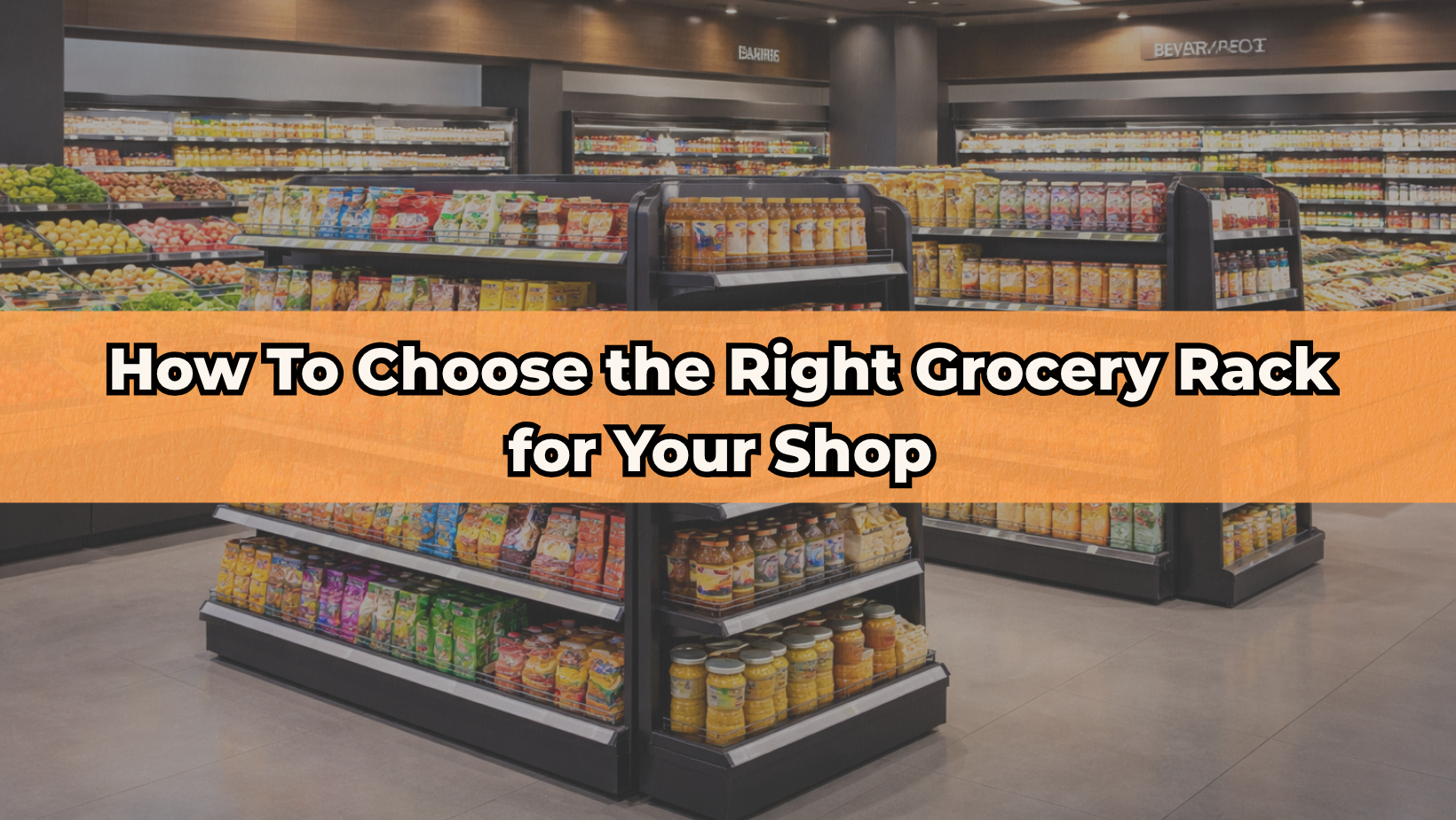
Walk into any well-run grocery store and one thing is immediately clear: the shelving makes sense. Products are easy to find, aisles feel open, and restocking happens without disrupting shoppers. This is not accidental. It is the result of choosing the right Grocery Store rack for shop from day one — and it is something the team at Era Display Solutions, a leading display rack manufacturer based in India, sees make or break new stores every year.
Retail store owners across India face a familiar challenge: the market is flooded with shelving options at varying price points, and there is very little honest guidance on what actually works for a specific store size, product category, or budget. A wrong purchase means wasted capital, poor product visibility, and constant restocking headaches.
This 2026 guide draws on the experience of Era Display Solutions — with over a decade of manufacturing and supplying display racks for shop environments across India — to give you a definitive, no-fluff framework for selecting the right grocery rack system.
Why Choosing the Right Grocery Rack Matters
Most store owners underestimate how directly their shelving decisions affect revenue. Product visibility and shelf placement drive impulse purchases, and a poorly chosen grocery rack for your shop can hide products, create cluttered aisles, and reduce customer dwell time — all of which hurt the bottom line.
Here is what the right display rack for your shop actually delivers:
- Maximum product exposure per square foot of floor space
- Easier navigation for customers, leading to longer in-store visits
- Lower labour costs through efficient restocking and inventory rotation
- A professional store image that builds customer trust and repeat visits
- Scalability — the ability to adapt your layout as your product range grows
According to Era Display Solutions, one of the most common mistakes new store owners make is treating rack selection as an afterthought. In reality, your grocery store rack system is a core part of your retail infrastructure — as important as your billing system or your cold storage.
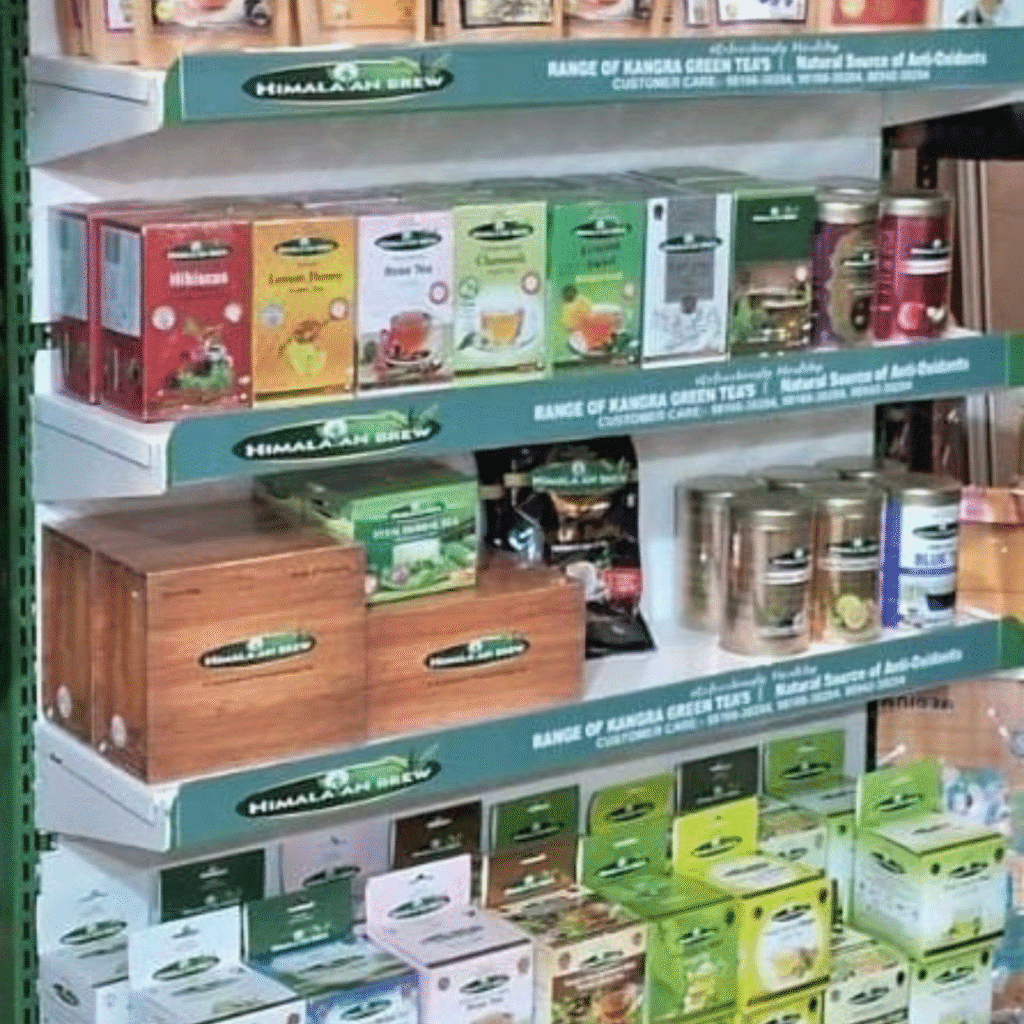
Grocery Store Rack
Era Display Solution is a trusted grocery rack manufacturer in Delhi offering durable and space-efficient solutions for modern retail stores. As a leading grocery rack supplier in India, we design heavy duty grocery racks for supermarkets that ensure maximum product visibility and long-term performance. We also specialize as a custom grocery rack manufacturer for retail stores, providing tailored designs based on your shop layout. Get the best grocery rack price for shop setup with high-quality materials and flexible configurations.
As a trusted grocery rack manufacturer in India, we offer customized grocery display rack for shop setups to meet different business needs. Ideal for supermarkets and retail stores, helps maximize space and improve store layout. Businesses looking to buy grocery rack solutions can choose from multiple designs, sizes, and bulk supply options at competitive pricing.
Types of Grocery Racks for Retail Stores
Understanding the core rack types is the first step to making a smart investment. The best grocery store rack setup typically combines two or three of these formats strategically. Here is how each one works and where it belongs.
1. Gondola Racks
Gondola racks are the backbone of any modern grocery or supermarket layout. These freestanding, double-sided shelving units create the aisles that define your store’s traffic flow. They are modular, meaning individual shelves can be added, removed, or repositioned to accommodate products of different heights.
Best suited for:
- FMCG products, packaged foods, beverages, and household essentials
- Mid-size grocery stores and full-scale supermarkets
- Stores that need to maximise SKU count per aisle
Era Display Solutions manufactures gondola racks in standard heights of 5 feet, 6 feet, and 7 feet, with shelf depths from 12 to 18 inches and adjustable pitch at 1-inch intervals. Every unit is built from cold-rolled MS steel with a high-bonding powder coat finish rated for a minimum 10-year service life.
2. Wall-Mounted Racks
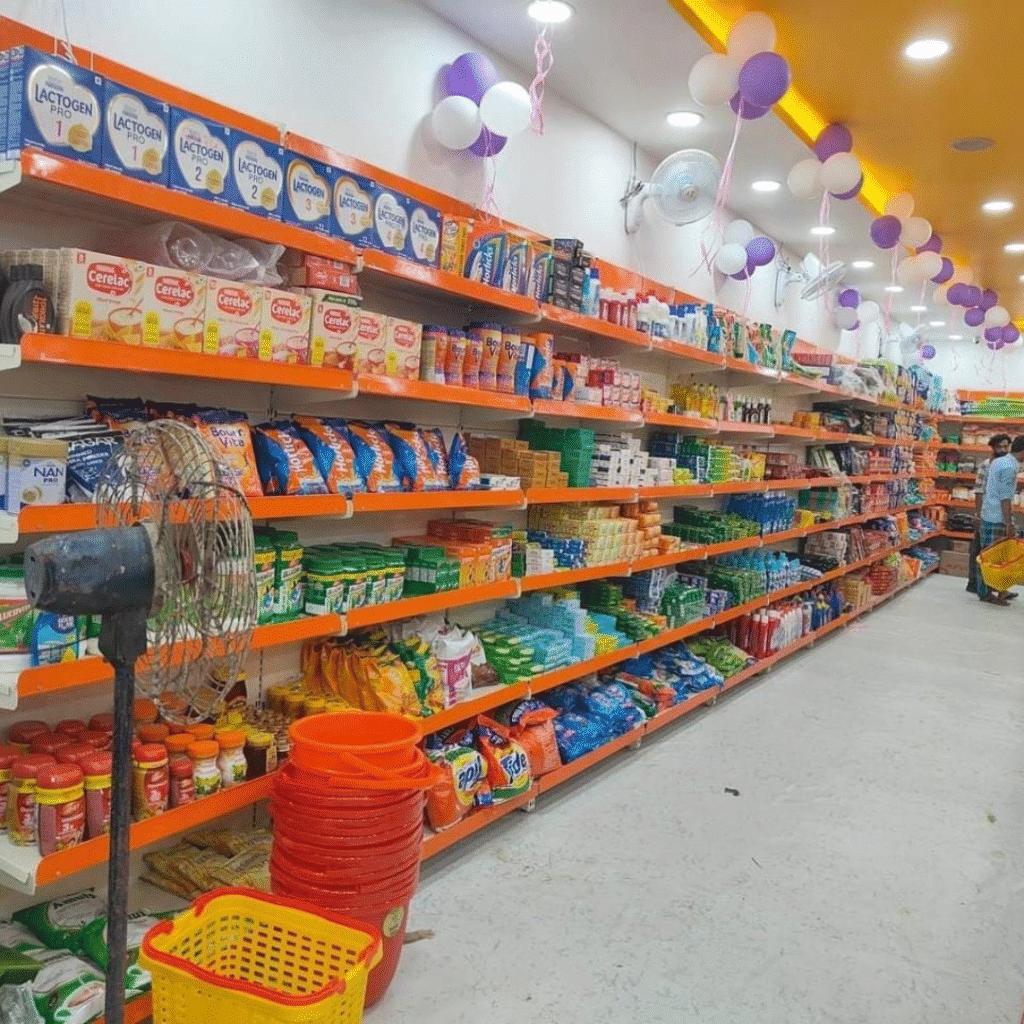
Wall-mounted grocery store racks are fixed to perimeter walls and allow you to use vertical space that would otherwise go to waste. These are ideal for stores with a smaller footprint, as they free up the centre floor area for gondola or island displays.
Key advantages:
- Can be mounted up to 8–10 feet high, significantly increasing shelf capacity
- Create a clean, organised look along store boundaries
- Support heavier loads when wall-anchored correctly with proper Fischer or chemical bolts
- Ideal for categories like snacks, toiletries, canned goods, and condiments
For smaller kirana-style stores across India, wall-mounted retail display racks are often the most space-efficient investment available. Era Display Solutions supplies wall rack systems with compatible perforated or slotted uprights that accept the same shelf brackets used in their gondola range — so accessories are fully interchangeable.
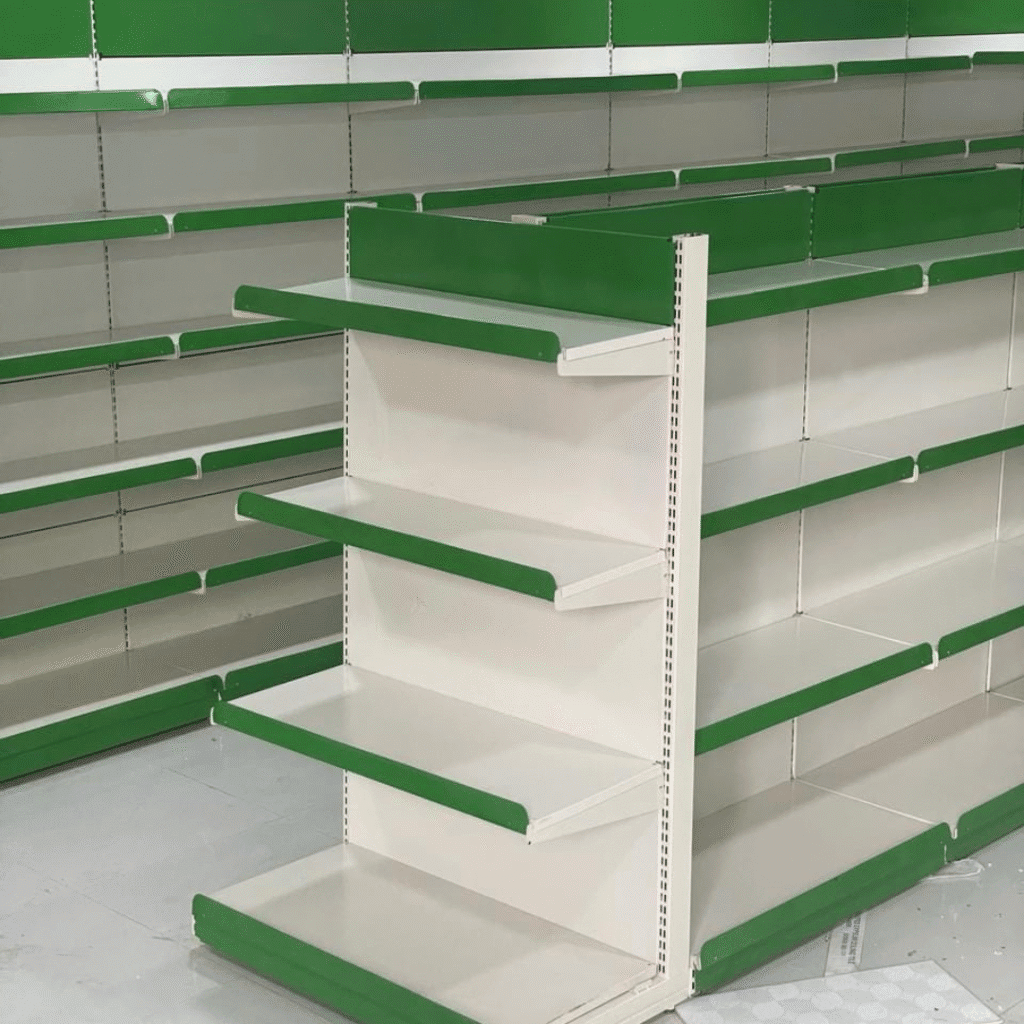
3. End Cap Displays
End cap displays are positioned at the open end of gondola aisles. They are among the highest-traffic spots in any retail store and function as prime real estate for promotional or high-margin products.
Research by retail analytics firms consistently shows that end cap placement can increase product sales by 30–40% compared to mid-shelf placement. Era Display Solutions designs end cap units to integrate seamlessly with their gondola range — matching upright widths, shelf profiles, and colour finishes — so your store looks consistent throughout.
Use end caps for:
- New product launches and seasonal promotions
- High-margin items that benefit from impulse visibility
- Cross-sell opportunities — for example, chips and dips positioned beside the beverage aisle
Key Factors to Consider Before Buying Grocery Racks
Selecting a grocery rack for your shop is not simply a matter of choosing what looks good. Several operational and structural factors need to be evaluated before any purchase is finalised. Era Display Solutions walks every client through the following checklist during their free pre-purchase consultation.
Store Size and Layout
Before purchasing any rack system, map your store’s floor plan. Identify wall lengths, entrance and exit points, billing counter placement, and any fixed structural elements like pillars or AC ducts. Your aisle width should be a minimum of 3.5 feet for comfortable customer movement — ideally 4 to 5 feet in high-footfall zones.
A rough benchmark used by Era Display Solutions’ installation team:
- Up to 400 sq ft: 4–6 gondola units + wall-mounted perimeter racks
- 400–800 sq ft: 8–14 gondola bays + wall racks + 2 end caps
- 800–2,000 sq ft: 20–35 gondola bays + full perimeter wall system + 4–6 end caps + specialty display zones
Load Capacity
Every shelf has a rated load capacity expressed in kilograms per shelf. For grocery products, this varies considerably across categories:
- Light-duty (up to 50 kg/shelf): Packaged snacks, sachets, personal care
- Medium-duty (50–100 kg/shelf): Bottled beverages, canned goods, cereals
- Heavy-duty (100–200 kg/shelf): Rice bags, bulk oils, detergents, and bulk grains
Era Display Solutions rates all shelf load capacities under uniformly distributed load (UDL) conditions — the industry-standard testing method. Always verify whether a competitor’s rack is rated under UDL or point-load conditions, as point-load ratings can be significantly higher but do not reflect real-world usage.
Material: Metal vs Other Options
In the Indian grocery retail market, powder-coated mild steel (MS) dominates the display rack landscape for good reason. It offers the best balance of strength, durability, and cost-effectiveness. Here is how materials compare:
- Powder-coated MS Steel — Most common; rust-resistant, durable, 10–15 year lifespan. Era Display Solutions uses 18–20 gauge cold-rolled steel with 60+ micron powder coating as standard.
- Stainless Steel — Premium grade used in hygiene-sensitive zones (bakeries, dairy sections). Significantly more expensive; not necessary for general FMCG grocery use.
- MDF / Wood-finish — Aesthetic appeal for artisan or specialty displays; not suitable for heavy loads or humid store environments.
- Wire Mesh Shelving — Good airflow and visibility; popular in produce sections and cold storage; limited load capacity per shelf.
Flexibility and Modular Design
Retail is dynamic. Your product mix will change, seasonal categories will rotate, and new SKUs will arrive. Investing in a modular rack system — where shelves, uprights, and accessories are interchangeable — means you can reconfigure your store without purchasing entirely new fixtures.
Era Display Solutions’ grocery rack range is built on a standardised upright and bracket system, which means:
- Shelves adjust at 1-inch increments across all rack sizes
- Add-on accessories — dividers, price tag rails, basket inserts, peg hooks — fit any unit in the range
- Replacement parts remain available for a minimum of 10 years from purchase date
- Colour finishes are maintained consistently so later additions match original installations
Grocery Rack Design Tips for Better Product Visibility
Even the most robust grocery rack for your shop will underperform if the merchandising strategy is poor. Here are principles the merchandising team at Era Display Solutions applies when setting up client stores:
- Eye-level is buy level — Place highest-margin products between 4.5 and 5.5 feet from the floor. Reserve lower shelves for bulk or budget items; top shelves for brand builders or slow-movers.
- Group by category logic — Cluster related products together and use shelf dividers or label rails to create clean category breaks. Shoppers should find any product type within seconds.
- Use colour blocking — Arrange products so their packaging creates visually appealing blocks of colour. This draws attention from the aisle and makes sections easier to scan.
- Keep bottom shelves productive — Never leave them sparse. Use these positions for larger pack sizes, bulk products, or heavy goods that customers expect to reach down for.
- Maintain shelf depth efficiency — Use push-forward systems or shelf extenders to keep products at the shelf edge. Products pushed to the back are effectively invisible.
- Integrate signage from the start — Era Display Solutions’ racks include built-in snap-in price tag rails and side panel frames. Proper signage is one of the highest-impact, lowest-cost improvements a grocery store can make.
Common Mistakes to Avoid When Buying Grocery Racks
After years of setting up retail rack installations across India, Era Display Solutions has documented the same avoidable errors appearing repeatedly. Here is what to watch out for:
- Buying on price alone — The cheapest grocery rack for your shop is rarely the most economical over time. Thin-gauge steel bends under load, poor coatings rust within two years, and non-standard dimensions make future expansion impossible.
- Ignoring ceiling height — Standard racks come in 5-foot and 6-foot variants. If your store has 10-foot ceilings, you are leaving significant vertical capacity unused. Era Display Solutions offers custom-height gondola and wall rack systems to maximise every inch.
- Overcrowding the floor plan — Too many racks in a small space creates a claustrophobic environment. Spacious, well-navigated stores consistently generate higher basket values.
- Not planning for future categories — A rack system that handles your current product mix but cannot adapt to a new category will require expensive replacement within 2–3 years.
- Skipping professional installation — Gondola racks over 6 feet must be anchored and levelled correctly. Era Display Solutions provides supervised installation with every project, ensuring all units meet structural safety standards.
- Mixing incompatible rack systems — Sourcing from multiple manufacturers creates visual inconsistency and prevents accessory sharing. A unified system from a single manufacturer avoids this entirely.
Cost Considerations in India (2026)
Pricing for grocery store racks in India has stabilised in 2026 following material cost volatility in previous years. The following benchmarks are based on Era Display Solutions’ current catalogue pricing and prevailing market rates:
For a complete grocery store setup of approximately 1,000 sq ft, expect a total rack investment of ₹1.5 lakh to ₹4 lakh depending on quality tier and unit count. Factor in transportation, supervised installation, and accessories (dividers, price rails, basket inserts) which typically add 15–25% to the base rack cost.
GST on metal display racks in India is applicable at 18% under HSN code 9403. Era Display Solutions provides GST-compliant invoices with every order, ensuring customers who are registered dealers can claim full input tax credit.
When evaluating total cost, factor in the full lifecycle: quality racks last 10–15 years, so the annual cost of ownership is often lower for premium systems than for budget alternatives that require replacement or repair within 3–5 years.
Era Display Solutions is a trusted display rack manufacturer with a decade of experience supplying grocery stores, supermarkets, and retail chains across India. If you are planning a new store setup or upgrading your existing shelving infrastructure, their purpose-built supermarket display racks are engineered specifically for the Indian retail environment — matched for shelf dimensions, load ratings, and modular accessories. Reach out to Era Display Solutions for a free store layout consultation and product recommendation tailored to your space and budget.
Frequently Asked Questions
Q1. What is the best grocery rack for a small shop in India?
For small grocery shops under 400 sq ft, Era Display Solutions recommends a combination of wall-mounted racks along perimeter walls and 2–4 single-sided gondola units. This maximises floor space while providing sufficient shelving capacity. Opt for 5-foot units with adjustable shelves and powder-coated steel. Choose a modular system so you can expand without replacing the entire setup.
Q2. How do I calculate how many racks I need for my store?
A practical rule used by Era Display Solutions: allow one gondola bay (approximately 3–4 feet wide) for every 50–75 SKUs you plan to carry. Measure your usable floor area, subtract aisle space (minimum 3.5 ft per aisle), and calculate the remaining rack footprint. Era Display Solutions offers free store layout consultations — use this service before finalising your order.
Q3. What is the standard height for supermarket display racks in India?
Standard supermarket display rack heights range from 5 feet to 7 feet. Most mid-size grocery stores opt for 6-foot gondolas, which balance product capacity with store visibility. Era Display Solutions also produces custom-height units up to 8 feet for stores with higher ceilings, with the top shelf commonly used for brand signage or stock overflow.
Q4. How much does a complete grocery rack setup cost in India in 2026?
For a standard 1,000 sq ft grocery store, budget ₹1.5 lakh to ₹4 lakh for the rack system. Era Display Solutions provides itemised quotes covering gondola units, wall racks, end caps, accessories, and installation. All quotes include GST-compliant pricing under HSN code 9403 so registered dealers can claim input tax credit without documentation issues.
Q5. Can grocery racks be customised for specific product categories?
Yes. Era Display Solutions offers customisation for shelf depth, rack height, powder coat colour, and accessories including peg hooks, basket rails, dividers, and angled shelves for beverage bottles. Category-specific configurations — such as deeper shelves for bulk goods or slanted shelves for canned goods — are part of their standard offering, not premium add-ons.
Conclusion
Choosing the right grocery rack for your shop is one of the most consequential infrastructure decisions you will make as a retail store owner. It directly affects how customers experience your store, how efficiently your staff operates, and how effectively your products convert browsers into buyers.
The key takeaways: start with a clear floor plan, match rack types to your product categories and store size, prioritise load capacity and material quality over upfront cost savings, and invest in a modular system that grows with your business.
Brands like Era Display Solutions — a specialist display rack manufacturer with deep roots in the Indian retail market — make this process straightforward with end-to-end support: from layout planning and product selection through to manufacture, delivery, and supervised installation.
For stores requiring Supermarket rack solutions, manufacturer-designed Grocery Display Rack can be tailored to store layout, product load, and space constraints. Retailers can explore custom rack options from ERA Display Solutions to achieve better space utilization, durability, and a professional retail display setup.