
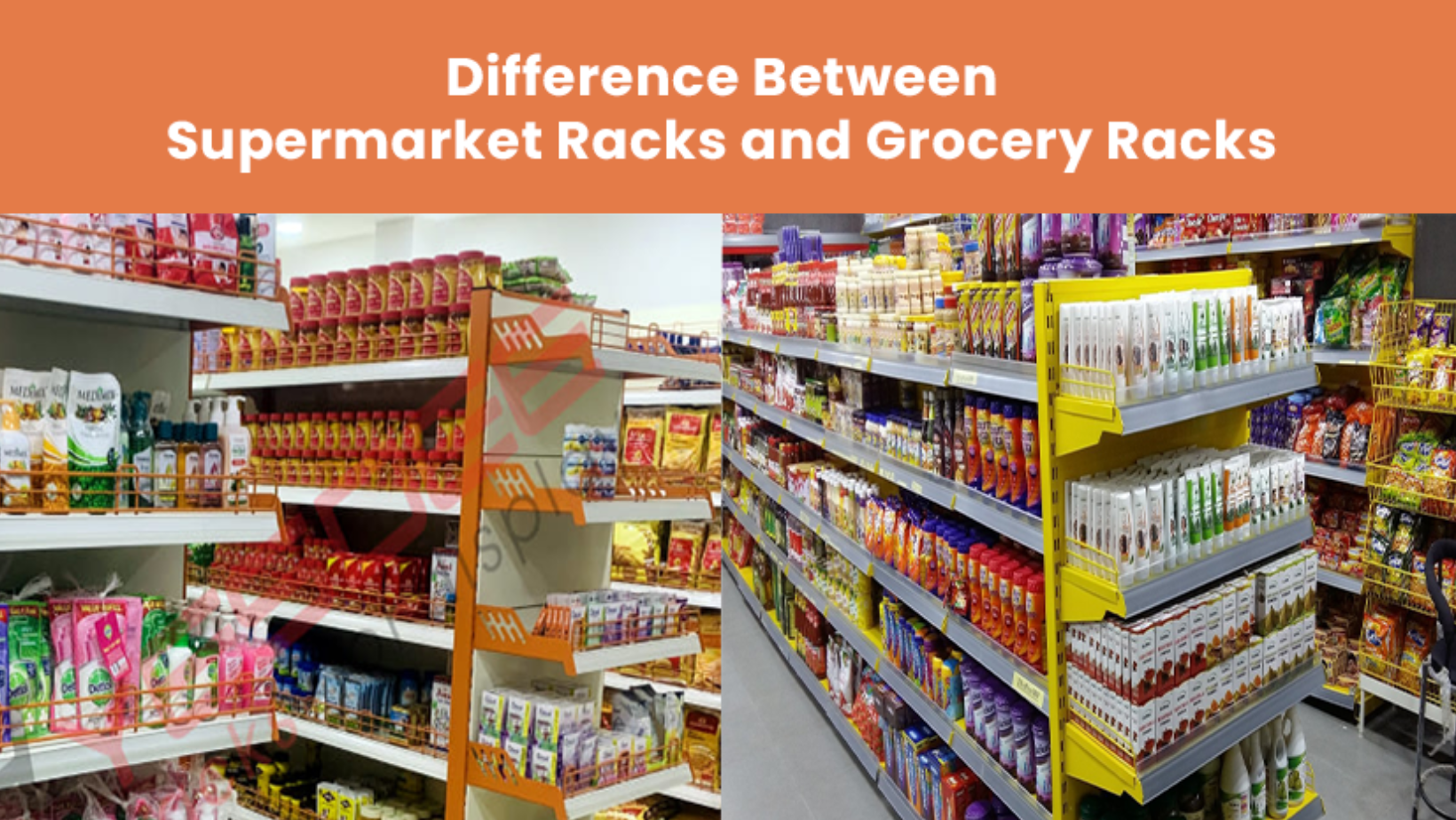
Supermarket racks and grocery racks serve distinct retail contexts despite functional overlap. Supermarket racks prioritize visual merchandising, modular flexibility, and customer navigation in organized retail formats. Grocery racks emphasize load-bearing capacity, space efficiency, and operational convenience for neighborhood stores and traditional outlets. Understanding these differences ensures appropriate infrastructure investment aligned with your store format and business model.
Supermarket Racks: Purpose & Use Case
Designed for Organized Retail Environments supermarket racks and grocery racks
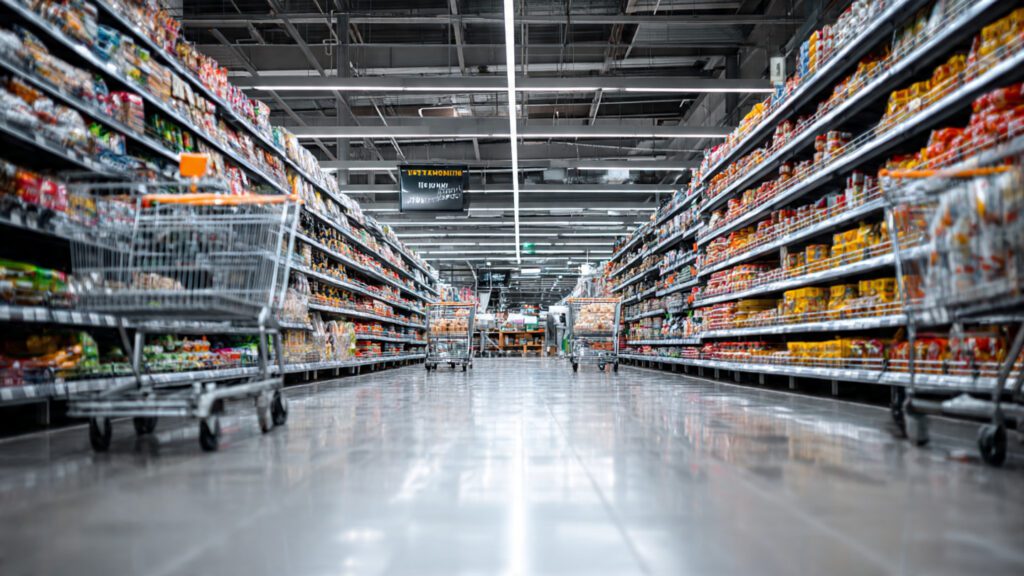
Supermarket racks function within planned retail spaces where customer experience, brand consistency, and category management drive design decisions. These systems create organized shopping environments with clear aisle structures, logical product groupings, and professional presentation standards that define modern retail. supermarket racks and grocery racks
The infrastructure supports diverse product categories—packaged foods, personal care, household goods, beverages—with visual consistency across store sections. Adjustable shelving accommodates varied packaging formats while maintaining aesthetic uniformity that reinforces brand identity and customer comfort.
Store Size and Layout Integration
These fixtures typically serve stores ranging from 800 square feet compact supermarkets to large-format hypermarkets exceeding 5000 square feet. The modular design creates systematic grid layouts with defined traffic patterns. Double-sided gondolas form central aisles while perimeter wall sections maximize display meterage.
Customer movement patterns influence placement decisions. High-margin categories occupy prime eye-level positions. Impulse items cluster near checkout zones. Strategic product placement, enabled by flexible retail shelving systems, converts foot traffic into purchase opportunities through merchandising psychology. supermarket racks and grocery racks
Product Mix and Display Requirementssupermarket racks and grocery racks
Supermarket assortments emphasize packaged, branded products with standardized dimensions. Shelving depths between 300-450mm accommodate most FMCG packaging. Adjustability becomes crucial as seasonal promotions, new product introductions, and category resets demand frequent reconfiguration without structural modifications. supermarket racks and grocery racks
The infrastructure must present products attractively while maintaining accessibility. Forward-facing displays, adequate spacing between items, and clear price visibility contribute to shopping convenience. Professional presentation differentiates organized retail from traditional formats in competitive markets.
Grocery Racks: Purpose & Use Case
Neighborhood Store Functionality
Grocery racks serve traditional kirana stores, compact neighborhood grocers, and food-focused retail formats where operational efficiency and product turnover matter more than merchandising sophistication. These fixtures prioritize functional storage density, restocking convenience, and durability under continuous use. supermarket racks and grocery racks
The design accommodates high-frequency product categories—staples, pulses, cooking essentials, snacks, beverages—that drive daily customer visits. Unlike supermarket environments emphasizing browsing, grocery stores focus on quick, purpose-driven shopping where customers know exactly what they need and expect efficient service.
Space Utilization in Constrained Environments supermarket racks and grocery racks
Kirana store racks maximize vertical storage within limited floor areas common in urban neighborhood locations. Compact footprints (300-350mm depth) preserve circulation space while dramatically increasing organized storage compared to traditional stacking methods behind counters.
Height specifications often reach 2100-2400mm, utilizing full vertical space for inventory visibility and capacity. Upper shelves handle slower-moving items or backup stock, while frequently purchased products occupy accessible middle zones. This density orientation reflects rent economics and inventory turnover patterns in traditional retail.
Load Handling and Durability Focus
Grocery fixtures handle heavier products regularly—rice bags, flour sacks, cooking oil containers, beverage cases. Reinforced base shelving with 150-250kg capacity per level prevents deflection under concentrated loads. Framework durability matters more than aesthetic refinement when serving practical storage needs.
Materials and construction prioritize longevity under demanding conditions. Frequent restocking, product shifting, and continuous weight stress require robust engineering. Store owners evaluate fixtures based on years of reliable service rather than initial appearance, making structural integrity the primary specification criterion.
Daily Operations Considerations
Traditional grocery formats involve counter-service models where shopkeepers retrieve products for customers. Fixtures must allow quick staff access from multiple sides. Open-back designs or narrow-profile units facilitate efficient product handoff without navigation obstacles.
Modern self-service grocery conversions require accessible display heights and clear product visibility from customer aisles. The transition from counter-service to self-selection changes fixture specifications toward customer-facing presentation while maintaining the operational efficiency traditional formats demand.
Key Differences Explained
Store Layout and Size Orientation
Supermarket racks create planned retail environments with systematic aisle structures, category zones, and deliberate customer flow patterns. The infrastructure defines shopping experience through organized navigation and visual consistency across 1000+ square foot spaces designed for browsing and discovery.
Grocery racks maximize storage density within space-constrained neighborhood stores, often under 500 square feet. Layout priorities emphasize inventory capacity and staff efficiency over customer movement patterns. The fixtures adapt to irregular floor plans, column placements, and operational constraints typical of converted residential or commercial spaces.
This fundamental difference reflects contrasting retail business models: destination shopping environments versus convenience-driven neighborhood access points serving local catchments.
Design Philosophy and Modularity
Supermarket infrastructure employs modular retail display systems with standardized components, adjustable shelving, and expansion compatibility. Reconfiguration flexibility accommodates category changes, promotional displays, and seasonal adjustments without structural replacement. Aesthetic consistency reinforces brand identity across product sections.
Grocery fixtures prioritize practical functionality with simpler designs emphasizing structural strength. While modern systems incorporate some adjustability, the focus remains on reliable storage rather than merchandising versatility. Finish standards emphasize durability over showroom appearance, reflecting pragmatic operational priorities.
Modularity matters differently: supermarkets need frequent reconfiguration supporting dynamic merchandising strategies; grocery stores require long-term durability with minimal maintenance intervention.
Here Are Full Information Supermarket Rack & Grocery Rack: Complete Solution for Retail Stores in India
Load Capacity Engineering supermarket racks and grocery racks
Standard supermarket shelving handles 80-120kg per level, suitable for packaged consumer goods with predictable weight distributions. The engineering balances capacity with aesthetic profile, avoiding industrial appearance while meeting functional requirements for typical FMCG products.
Grocery applications demand heavier-duty specifications. Base shelving supports 150-250kg for staples, bulk packaging, and beverage cases. Reinforced frameworks prevent deflection under concentrated loads from large rice bags or stacked oil containers. Safety factors accommodate uneven loading patterns common in traditional retail operations.
This capacity difference reflects product mix: supermarkets display processed, packaged goods; grocery stores handle bulk commodities and heavier staple categories driving neighborhood shopping trips.
Customer Interaction Models
Supermarket racks facilitate self-service shopping with product accessibility, clear pricing, and comfortable browsing conditions. The infrastructure removes barriers between customers and merchandise, encouraging exploration and impulse purchases through visual merchandising techniques.
Traditional grocery fixtures support counter-service models where shopkeepers mediate product access. Display visibility matters for customer selection, but fixtures primarily serve inventory storage with staff-side accessibility. Modern hybrid models incorporate self-service elements while maintaining operational layouts suited to assisted shopping.
This distinction affects fixture design fundamentally: one optimizes customer-facing presentation; the other prioritizes staff operational efficiency and inventory density.
Investment Perspective and Value Calculation
Supermarket infrastructure represents significant capital investment with long-term amortization expectations. Quality systems justify premium pricing through merchandising capability, reconfiguration flexibility, and professional appearance sustaining brand positioning. Total cost of ownership includes expansion compatibility and multi-location standardization benefits.
Grocery store owners evaluate fixtures through immediate functionality and durability metrics. Price sensitivity reflects tighter operating margins and smaller scale operations. Value calculations emphasize years of reliable service and minimal maintenance rather than merchandising sophistication or aesthetic refinement.
Both perspectives are rational within their business contexts, but lead to different specification priorities and supplier selection criteria.
Comparison Table: Supermarket Racks vs Grocery Racks
| Aspect | Supermarket Racks | Grocery Racks |
| Ideal Store Type | Organized retail: 800+ sq ft supermarkets, hypermarkets | Neighborhood kirana stores, compact grocers: 200-800 sq ft |
| Primary Focus | Visual merchandising, customer experience, brand consistency | Storage density, operational efficiency, durability |
| Design Flexibility | Highly modular, adjustable shelving, frequent reconfiguration | Fixed or limited adjustability, long-term stability |
| Load Capacity | 80-120kg per shelf (standard), suitable for packaged goods | 150-250kg per shelf (reinforced), handles staples and bulk items |
| Customer Interaction | Self-service browsing, impulse purchase enablement | Counter-service or assisted shopping, quick transactions |
| Aesthetic Priority | Professional finish, uniform appearance, brand alignment | Functional durability, practical presentation |
| Installation Complexity | Systematic layout planning, professional installation teams | Adaptable to irregular spaces, simpler setup requirements |
| Cost Range | Premium pricing reflecting engineering and finish quality | Cost-conscious solutions emphasizing value and longevity |
| Expansion Capability | Component compatibility, multi-location standardization | Individual store focus, replacement over expansion |
| Best Use Scenario | Planned retail spaces with merchandising strategies and brand standards | Traditional neighborhood stores prioritizing inventory capacity and daily operations |
Making the Right Infrastructure Decision
Context Determines Appropriate Solutions
The distinction between supermarket and grocery racks matters because mismatched infrastructure wastes capital and compromises operational effectiveness. A neighborhood kirana store investing in premium modular supermarket systems pays for capabilities it cannot utilize. Conversely, a modern supermarket using basic grocery fixtures sacrifices merchandising potential and customer experience quality.
Successful retail infrastructure investment begins with honest assessment of your store format, business model, and growth trajectory. Traditional counter-service operations need different solutions than self-service environments. Space-constrained locations have different priorities than planned retail developments.
Integration with Comprehensive Planning
Fixture selection represents one component within broader retail infrastructure decisions. Store layout, product assortment, operational workflows, and customer service models all interact with shelving choices. Understanding how supermarket racks versus grocery racks align with these factors prevents costly mismatches. supermarket racks and grocery racks
For detailed guidance on evaluating material specifications, load requirements, spatial planning, and supplier selection criteria applicable to both categories, explore our complete supermarket and grocery rack solutions for retail stores resource covering the full decision framework.
Hybrid Approaches for Evolving Formats
Many Indian retailers operate in transitional spaces between traditional grocery and modern supermarket models. Neighborhood stores adopting self-service elements, or compact supermarkets serving traditional shopping patterns, may benefit from hybrid specifications combining grocery durability with supermarket presentation standards.
This middle ground requires careful specification: reinforced capacity where needed, modular flexibility for high-turnover categories, professional finish supporting upgraded customer perception. Working with manufacturers experienced in Indian retail evolution ensures solutions matching your specific operational reality rather than generic category assumptions.
Future-Proofing Infrastructure Investments
Retail business models evolve. Today’s kirana store may expand into self-service format. Current compact supermarket might add locations requiring standardized infrastructure. Fixture decisions should consider likely business trajectory, not just immediate needs.
Modular systems with expansion compatibility protect against premature obsolescence. Manufacturers supporting long-term relationships provide components matching existing installations, technical consultation for modifications, and expertise from working across retail format spectrum. This partnership value compounds over multi-year operational periods.
Connecting Specification to Business Outcomes
Infrastructure quality affects customer perception, operational efficiency, and sales productivity—business outcomes extending far beyond initial fixture cost. Professional presentation influences store credibility. Durable systems reduce maintenance distraction. Well-planned layouts improve shopping convenience and basket size.
Understanding whether your context demands supermarket rack capabilities or grocery rack priorities focuses investment where it delivers measurable return. This clarity prevents both over-spending on unnecessary sophistication and under-investing in capabilities that could improve business performance. Our comprehensive guide to retail racking systems explained in detail provides the full framework for connecting infrastructure decisions to business objectives.
Conclusion supermarket racks and grocery racks
The supermarket rack versus grocery rack distinction reflects real differences in retail formats, operational models, and business priorities rather than mere terminology variation. Supermarket infrastructure enables merchandising sophistication, customer experience quality, and brand consistency in organized retail environments. Grocery fixtures maximize storage efficiency, operational convenience, and durability in traditional neighborhood formats.
Neither category is universally superior; each serves its intended context effectively. Success comes from matching infrastructure capabilities to your specific store format, business model, and growth plans. This alignment ensures capital investment delivers appropriate functionality without paying for capabilities you cannot utilize or compromising on features your operation genuinely requires.
For stores requiring custom rack solutions, manufacturer-designed supermarket and grocery racks can be tailored to store layout, product load, and space constraints. Retailers can explore custom rack options from ERA Display Solutions to achieve better space utilization, durability, and a professional retail display setup.