
Running a small or medium grocery store in India is no simple task. Between managing a wide range of products, competing with nearby stores, and making the most of often-limited floor space, store owners constantly face pressure to do more with less. One area that is frequently underestimated — yet directly affects sales, customer experience, and operational efficiency — is the shelving infrastructure.
The wrong rack system can create cluttered aisles, reduce product visibility, and make restocking a daily frustration. The right grocery rack solutions for small stores, on the other hand, can transform even a compact kirana into a well-organized, customer-friendly space that encourages browsing and increases basket size.
At Era Display Solution, a Delhi-based supermarket rack manufacturer with years of experience serving retailers across India, we have worked with hundreds of store owners to help them select, plan, and install shelving systems that suit their specific needs and budgets. This guide draws on that hands-on experience to help you make an informed decision.
Challenges Small & Medium Grocery Stores Face
Before exploring solutions, it helps to understand why grocery store shelving deserves careful thought. These are the most common pain points we encounter:
1. Limited Floor Space
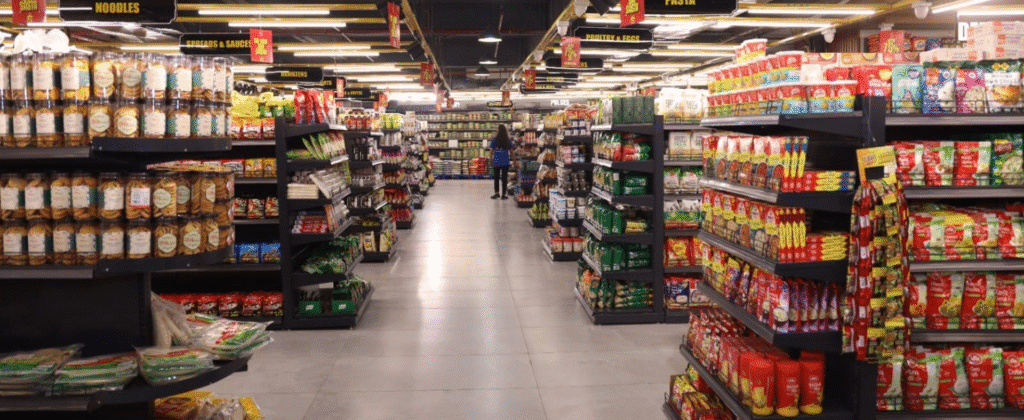
Most small grocery stores in India operate in spaces under 500 sq. ft. Every square foot must work hard. Poor rack placement wastes usable area and creates bottlenecks in movement.
2. High Product Density
A typical kirana or mini-supermarket stocks anywhere from 500 to 3,000 SKUs. Without structured shelving, products pile up, categories blur, and customers struggle to locate items — leading to lost sales.
3. Budget Constraints Grocery Rack Solutions
Smaller stores often operate on tight margins. Investing in a shelving system that balances durability with cost-effectiveness is essential. Cheap racks that bend under load or rust quickly end up costing more in the long run.
4. Product Visibility and Impulse Buying
Research consistently shows that well-displayed products sell faster. Low-quality or poorly arranged shelving hides products rather than showcasing them, reducing both planned and impulse purchases.
Best Grocery Rack Solutions: A Practical Breakdown
Based on store size, product mix, and budget, here are the most effective rack types for small and medium grocery retailers in India.
Gondola Racks for Compact Layouts
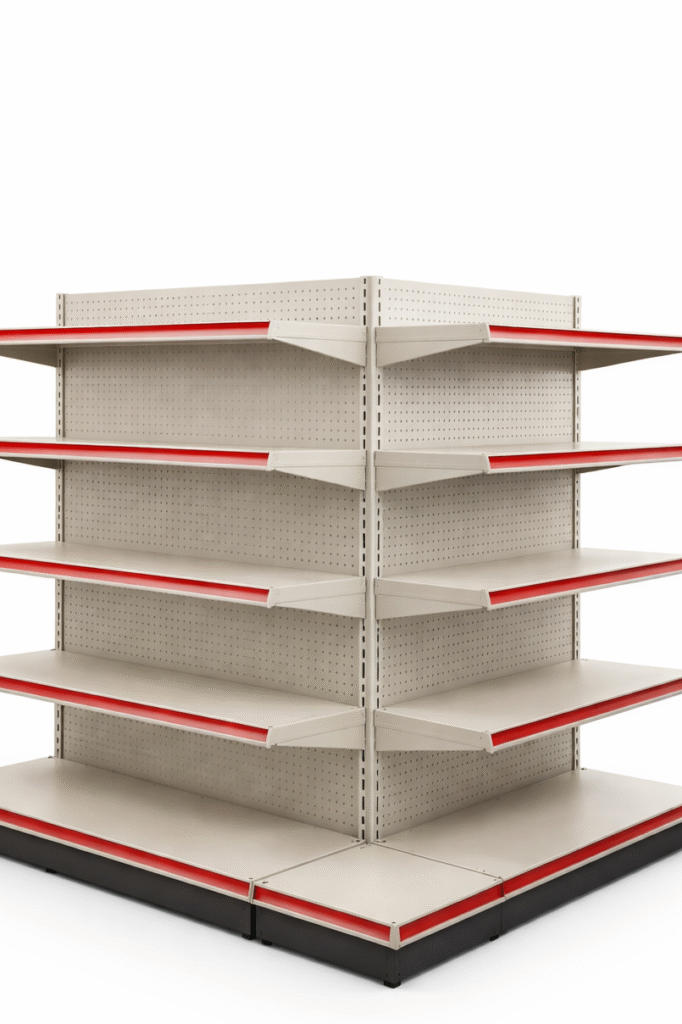
Gondola racks are the backbone of most Indian retail stores, and for good reason. These double-sided shelving units allow products to be displayed on both faces, making them ideal for aisle-based layouts even in limited floor space. Grocery Rack Solutions
A well-planned gondola layout can double the display capacity of a store without expanding the footprint. Standard gondola units typically support 80–150 kg per shelf depending on gauge, making them suitable for everything from packaged snacks to heavier household goods.
For stores planning their layout, our
supermarket display rack guide covers gondola spacing and aisle width recommendations in detail.
- Ideal for: Mini-supermarkets, grocery stores with defined aisles
- Load capacity: 80–150 kg per shelf (varies by frame gauge)
- Best configuration: Back-to-back units in parallel rows
Wall-Mounted Racks for Space Saving Grocery Rack Solutions
Wall-mounted grocery racks are one of the most underutilized tools in small store design. By occupying vertical wall space rather than floor area, they free up the center of the store for gondola rows or customer movement.
These racks are particularly effective for displaying packaged goods, beverages, cereals, and cleaning products. They can be customized with adjustable shelves to accommodate products of varying heights, and they create a clean, organized look that improves the overall shopping environment.
- Ideal for: Kirana stores, pharmacies with adjacent grocery sections, corner stores
- Load capacity: 50–100 kg per shelf depending on bracket design
- Key benefit: Maximizes vertical space without reducing walkway width
Slotted Angle Racks for Budget-Conscious Stores
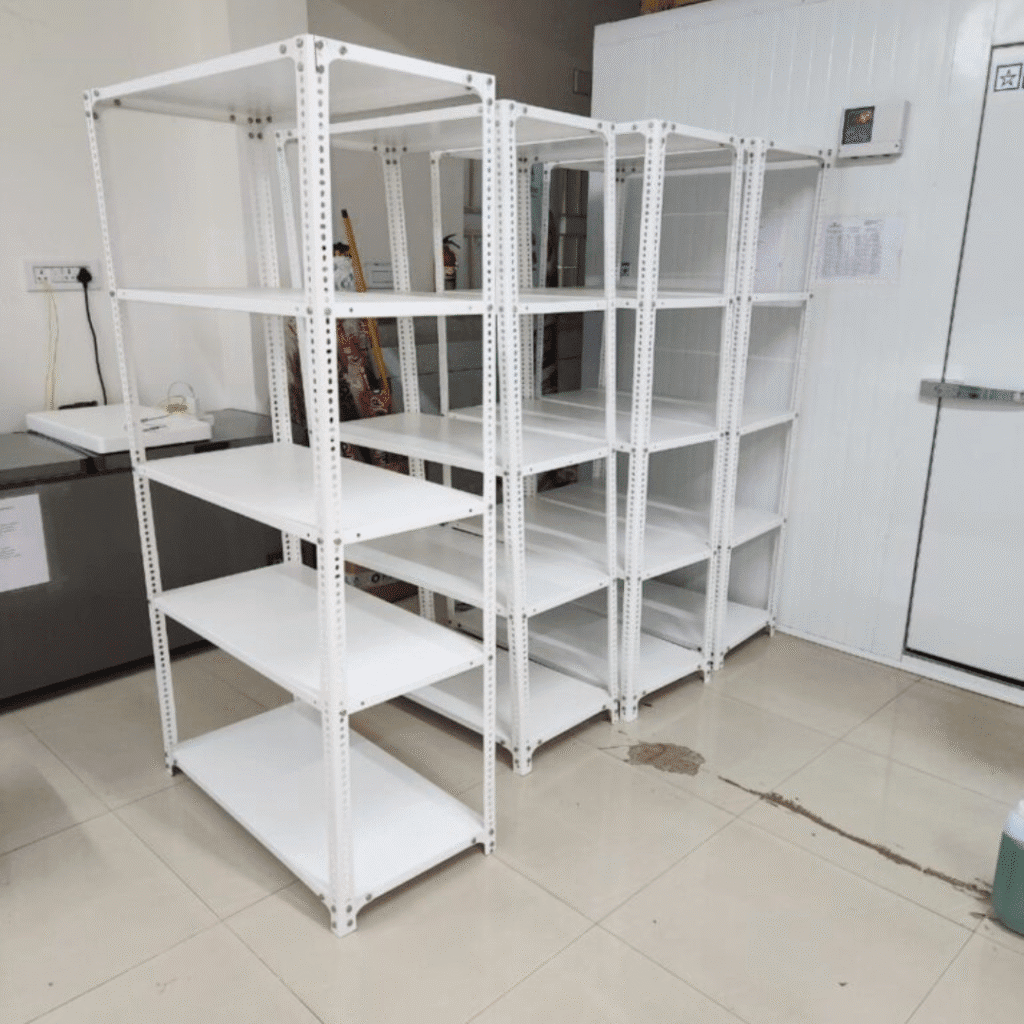
For store owners working with tighter budgets, slotted angle racks offer a practical and affordable entry point into organized retail shelving. These racks are assembled using steel angles and bolts, making them easy to reconfigure as product categories shift. Grocery Rack Solutions
While they may not carry the same premium appearance as gondola or modular units, quality slotted angle racks are durable, cost-effective, and widely used in kirana stores and smaller grocery outlets across India. They typically support 60–120 kg per shelf and can be expanded incrementally as the business grows.
- Ideal for: Kirana stores, storage areas, back-of-house shelving
- Load capacity: 60–120 kg per shelf
- Advantage: Low upfront investment, easy self-assembly
Checkout Display Racks for Impulse Sales
The billing counter area is prime real estate for impulse purchases. Small checkout display racks positioned near the cash register encourage customers to add last-minute items — candies, gums, small-size snack packs, or single-serve products. Grocery Rack Solutions
These compact units typically have 3–5 shelves and fit within a footprint of 1–2 sq. ft. Despite their size, they can meaningfully increase average transaction value over time.
- Ideal for: Any store with a dedicated billing counter
- Best products: Confectionery, small snacks, personal care sachets, batteries
- ROI: High — low cost, high per-unit margin on displayed items
Custom Modular Shelving for Medium Stores Planning Expansion
Medium-sized grocery stores — typically ranging from 1,000 to 5,000 sq. ft. — have more complex needs. They require a shelving system that can be reconfigured as product lines expand and seasonal displays change. Custom modular retail shelving addresses exactly this.
Modular systems use standardized components — uprights, shelves, end panels, and accessories — that can be rearranged without replacing the entire unit. This makes them a smart long-term investment for stores that anticipate growth. Grocery Rack Solutions
To understand the full range of options available in the Indian market, see our overview of types of supermarket racks used in Indian retail stores.
- Ideal for: Supermarkets, large grocery chains, stores with seasonal sections
- Load capacity: 100–200 kg per shelf with heavy-duty frames
- Key benefit: Scalable — add sections without discarding existing infrastructure
How to Choose the Right Rack for Your Store Size
Selecting the right shelving system is not just about aesthetics — it is a practical decision that affects daily operations. Here are the key factors to evaluate: Grocery Rack Solutions
Store Size vs. Rack Type Grocery Rack Solutions
- Under 300 sq. ft.: Wall-mounted racks + 2–3 gondola rows + checkout display
- 300–800 sq. ft.: Mix of gondola racks and wall units, slotted angles for storage
- 800–3,000 sq. ft.: Full gondola layout with modular end caps and specialty displays
- 3,000+ sq. ft.: Custom modular shelving with zoned category layouts
Product Weight Considerations Grocery Rack Solutions
Heavy products such as cooking oil, rice bags, and bottled beverages require racks with thicker gauge steel frames. Always specify load requirements before ordering — a rack rated for 60 kg per shelf will fail prematurely under grocery loads if products regularly exceed that weight.
Aisle Spacing
The minimum recommended aisle width for comfortable customer movement is 36 inches (approximately 90 cm). For stores with trolley access, 48 inches is preferable. Rack height should be selected to maintain sightlines and prevent the store from feeling enclosed.
Future Scalability
If you plan to expand your product range or store footprint in the next 2–3 years, invest in a modular system now. The additional upfront cost will be far less than replacing incompatible racks later.
For a deeper look at layout planning, explore our supermarket rack solutions page.
Why Quality Matters in Grocery Rack Systems
In the Indian retail context, where humidity, temperature fluctuation, and heavy daily usage are all real factors, rack quality directly affects long-term cost.
Powder Coating and Rust Resistance
A quality powder-coated finish not only improves appearance but provides a durable barrier against moisture and surface corrosion. In grocery environments — particularly near produce, frozen sections, or areas with high foot traffic — this matters significantly over a 5–10 year lifespan.
Load-Bearing Strength
Reputable manufacturers specify load ratings based on tested performance, not estimates. Always ask for load certification data when purchasing, particularly for gondola and modular units. Under-spec’d racks bend, warp, and eventually fail — creating safety risks and requiring early replacement.
Long-Term ROI
A well-built grocery shelving system is a 10–15 year investment. The cost difference between a quality rack and a budget alternative may be 20–30% upfront, but quality units typically require no replacement within that period, whereas cheaper alternatives often need repair or full replacement within 3–5 years.
Era Display Solution manufactures all racks using high-grade cold-rolled steel with electrostatic powder coating, and provides load certifications across product lines. Our manufacturing facility in Delhi supplies retailers across India, from individual kirana stores to regional grocery chains.
Conclusion:
The right grocery rack solution is not just about filling a store with shelves. It is about creating a structured, efficient retail environment that makes products easy to find, supports safe loading, and adapts to your business as it grows.
Whether you are setting up a new kirana store, expanding a medium-sized grocery, or upgrading an existing layout, the key is to match your rack type to your store size, product weight, and long-term plans. Gondola racks, wall-mounted units, modular shelving, and budget-friendly slotted angle racks each serve a distinct purpose — and the best results come from combining them thoughtfully.
For stores requiring Supermarket rack solutions, manufacturer-designed supermarket and grocery racks can be tailored to store layout, product load, and space constraints. Retailers can explore custom rack options from ERA Display Solutions to achieve better space utilization, durability, and a professional retail display setup.
Frequently Asked Questions (FAQs)
Q1. What is the best grocery rack type for a small store under 400 sq. ft.?
For stores under 400 sq. ft., a combination of wall-mounted racks along the perimeter and 2–3 gondola rows in the center works best. This layout maximizes display capacity while maintaining comfortable customer movement. Checkout display racks near the billing counter can further boost impulse sales.
Q2. How much weight can a standard grocery gondola rack hold?
Standard gondola racks typically hold between 80 and 150 kg per shelf, depending on the steel gauge and frame design. Heavy-duty variants can support up to 200 kg per shelf. Always confirm load ratings with the manufacturer before purchase, especially for shelves holding oils, beverages, or packaged grains.
Q3. Are modular shelving systems worth the extra cost for medium stores?
Yes, particularly for stores planning to expand their SKU range or reconfigure categories seasonally. Modular systems allow individual components to be added, repositioned, or replaced without purchasing new racks entirely. Over a 5–10 year horizon, the flexibility typically offsets the higher initial investment.
Q4. What should I look for when buying grocery racks in India?
Key factors include steel gauge (thickness), powder-coat quality, load certification, compatibility with accessories (shelf dividers, label holders, pegboards), and after-sales support. Buying from an established supermarket rack manufacturer with documented specifications reduces the risk of receiving substandard product.