
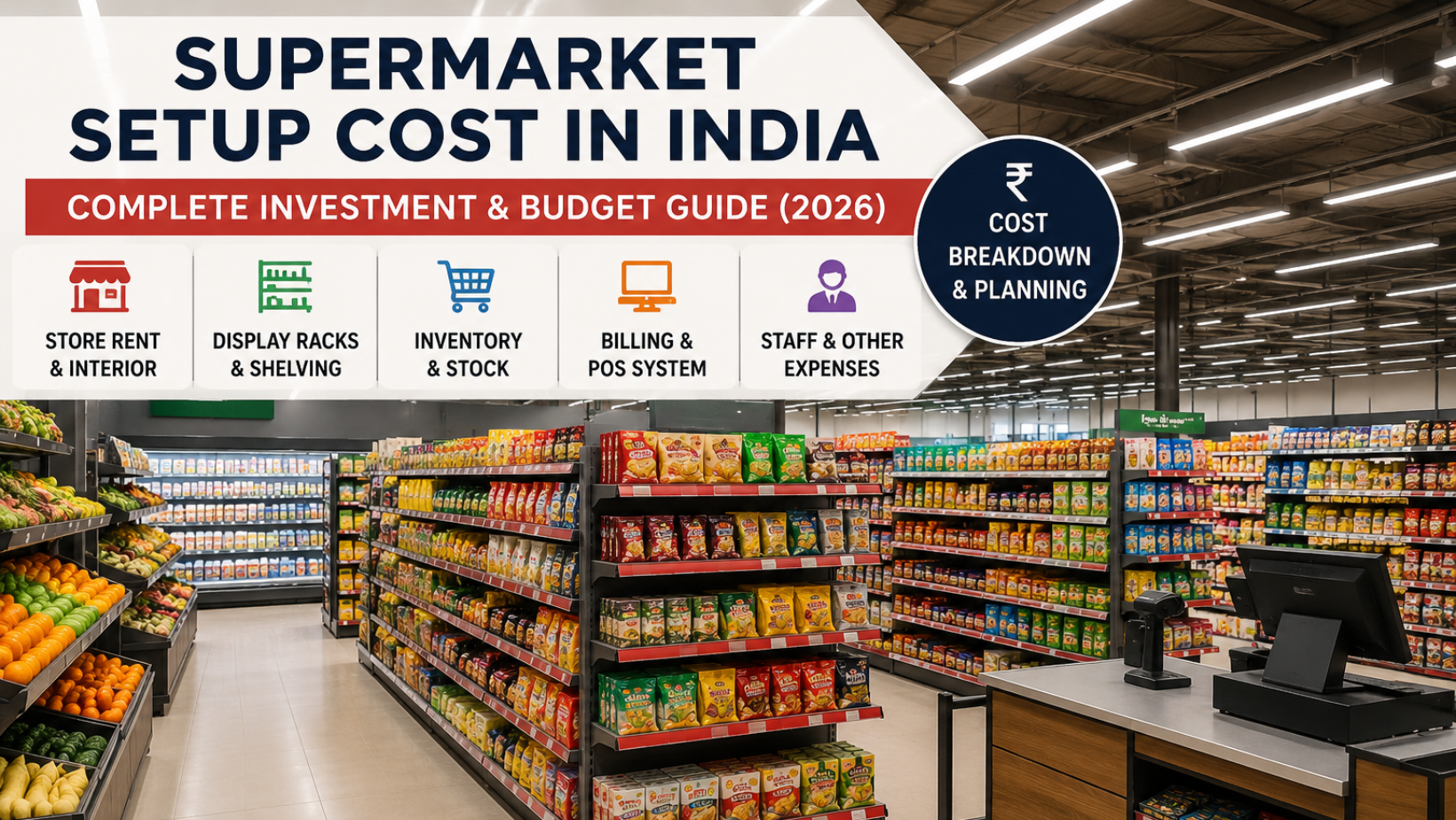
Starting a supermarket business can be a profitable investment in India’s growing retail sector. However, before launching a new store, understanding the supermarket setup cost in India is essential for proper budgeting and long-term success. Whether you are planning a small neighborhood grocery store or a large-format supermarket, your investment will depend on several factors such as store size, location, display racks, inventory, interior design, and operational requirements.
Many entrepreneurs underestimate the actual cost to start a supermarket in India, which can lead to financial challenges during the setup phase. Proper planning helps avoid unnecessary expenses while ensuring a smooth shopping experience for customers.
In this guide, we will break down the supermarket investment cost, explain major expense categories, and provide practical insights into planning a successful retail store.
How Much Does It Cost to Set Up a Supermarket in India?
The average supermarket business setup cost in India typically ranges from ₹5 Lakhs to ₹40 Lakhs or more depending on store size, location, inventory requirements, and store infrastructure.
| Store Size | Estimated Investment |
|---|---|
| 500 Sq Ft | ₹5 – ₹10 Lakhs |
| 1000 Sq Ft | ₹10 – ₹20 Lakhs |
| 2000 Sq Ft | ₹20 – ₹40 Lakhs+ |
Key Takeaways
- Store size significantly impacts overall investment.
- Display racks and shelving systems are major infrastructure costs.
- Inventory usually accounts for the largest portion of the budget.
- Proper layout planning can reduce unnecessary expenses.
- Investing in durable fixtures helps lower long-term maintenance costs.
While estimating the total supermarket setup cost, it’s equally important to calculate the exact number of display racks required for your store. Read our detailed guide on How Many Racks Does a 1000 Sq Ft Supermarket Need? to understand rack quantity, layout planning, and shelf arrangement before making your investment.
Factors That Affect Supermarket Setup Cost
Several factors influence the overall grocery store setup cost and determine how much capital is required before opening.
Store Size
The size of your supermarket directly affects the number of racks, inventory volume, staffing requirements, and interior work needed.
For example:
- A 500 sq ft store requires fewer display racks and lower inventory.
- A 1000 sq ft supermarket needs additional shelving and larger product categories.
- A 2000 sq ft store often requires advanced store planning and higher inventory investment.
Larger stores naturally involve a higher supermarket investment cost but may offer greater revenue potential.
Location and Rental Costs
Location plays a crucial role in determining setup expenses.
Prime commercial areas generally involve:
- Higher rental deposits
- Increased monthly rent
- Greater competition
- Higher customer footfall
Entrepreneurs should carefully evaluate location costs before finalizing a store.
Before selecting a store location and planning your investment, it is also useful to review the latest retail sector insights and business trends published by the Invest India. Understanding market opportunities can help entrepreneurs make better decisions regarding store size, location, and future expansion plans.
Interior Design and Store Layout
A well-planned layout improves customer movement and product visibility.
Typical interior expenses include:
- Flooring
- Lighting
- Electrical work
- Ceiling design
- Signage
- Painting
Efficient layout planning can improve space utilization and reduce unnecessary construction expenses.
Display Racks and Shelving Systems
Display racks are among the most important investments in a supermarket.
Quality shelving systems help:
- Organize products efficiently
- Improve shopping experience
- Maximize available floor space
- Increase product visibility
Common rack types include:
- Gondola racks
- Wall-mounted racks
- End-cap displays
- Checkout display units
Internal Link Suggestion:
Link this section to your Supermarket Racks product page using anchor text:
“supermarket display racks”.
Inventory and Stock Requirements
Inventory generally represents the largest portion of the cost to start a supermarket in India.
Products may include:
- Grocery items
- Beverages
- Household essentials
- Personal care products
- Packaged foods
The number of categories and SKU variety directly affects inventory investment.
Billing and POS Systems
Modern supermarkets require:
- POS machines
- Barcode scanners
- Billing software
- Receipt printers
These systems improve operational efficiency and customer service.
Staff and Operational Expenses
Additional setup costs include:
- Staff recruitment
- Training
- Uniforms
- Initial salaries
Planning operational expenses in advance helps maintain smooth business operations after launch.
Detailed Cost Breakdown of a Supermarket Setup
The following table provides a general estimate of setup expenses.
| Expense Category | Estimated Cost Range |
|---|---|
| Shop Rent Deposit | ₹50,000 – ₹5 Lakhs |
| Interior Work | ₹1 – ₹5 Lakhs |
| Supermarket Racks | ₹75,000 – ₹5 Lakhs |
| Billing Counter | ₹20,000 – ₹1 Lakh |
| POS System | ₹15,000 – ₹1 Lakh |
| Initial Inventory | ₹2 – ₹20 Lakhs |
| Signage & Branding | ₹20,000 – ₹2 Lakhs |
| Staff Hiring | ₹50,000 – ₹3 Lakhs |
Actual costs vary depending on store location, supplier selection, and business goals.
Supermarket Rack Cost and Budget Planning
When calculating the supermarket setup cost in India, shelving systems deserve special attention because they directly influence space utilization and merchandising effectiveness.
Gondola Racks
Gondola racks are among the most commonly used shelving solutions in supermarkets.
Benefits include:
- Flexible configuration
- Maximum product display
- Easy inventory organization
Wall-Mounted Display Racks
These racks utilize wall space efficiently and are suitable for:
- Grocery products
- Packaged foods
- Personal care items
They help maximize display capacity without occupying central floor space.
End Cap Display Units
End cap displays attract customer attention and can be used for:
- Promotional products
- Seasonal items
- High-margin merchandise
Checkout Counter Displays
Checkout areas create opportunities for impulse purchases.
Common products include:
- Chocolates
- Snacks
- Small accessories
Customized Display Racks
Custom display racks are designed according to store dimensions and product requirements.
Advantages include:
- Better space utilization
- Brand consistency
- Enhanced customer experience
Internal Link Suggestion:
Link to your Display Racks page.
Estimated Setup Cost by Store Size
500 Sq Ft Supermarket
Ideal for neighborhood convenience stores.
| Expense | Estimated Cost |
|---|---|
| Interiors | ₹1 Lakh |
| Racks | ₹75,000 |
| Inventory | ₹3 Lakhs |
| Equipment | ₹50,000 |
| Miscellaneous | ₹75,000 |
Total: ₹5–10 Lakhs
1000 Sq Ft Supermarket
Suitable for medium-sized grocery stores.
| Expense | Estimated Cost |
|---|---|
| Interiors | ₹2 Lakhs |
| Racks | ₹1.5 Lakhs |
| Inventory | ₹8 Lakhs |
| Equipment | ₹1 Lakh |
| Miscellaneous | ₹2 Lakhs |
Total: ₹10–20 Lakhs
2000 Sq Ft Supermarket
Suitable for large-format retail operations.
| Expense | Estimated Cost |
|---|---|
| Interiors | ₹5 Lakhs |
| Racks | ₹4 Lakhs |
| Inventory | ₹20 Lakhs |
| Equipment | ₹2 Lakhs |
| Miscellaneous | ₹5 Lakhs |
Total: ₹20–40 Lakhs+
Before finalizing your investment budget, it is important to understand how many supermarket racks are needed for a 1000 sq ft store, as rack quantity directly affects both setup cost and space utilization.
How to Reduce Supermarket Setup Costs Without Compromising Quality
Many business owners focus only on reducing expenses. However, smart investments often generate better long-term returns. Business owners should also follow a detailed checklist before buying supermarket racks to avoid purchasing shelving systems that do not match their store requirements.
Invest in Durable Display Racks
Quality shelving systems last longer and require less maintenance.
Plan the Store Layout Before Installation
Proper planning helps avoid:
- Space wastage
- Rack relocation costs
- Customer movement issues
Optimize Rack Placement
Strategic placement improves product visibility and encourages purchases.
Choose Modular Rack Systems
Modular racks allow future expansion without replacing existing infrastructure.
Buy Directly from Manufacturers
Working directly with manufacturers can help reduce procurement costs and ensure product quality.
Common Mistakes That Increase Supermarket Setup Costs
Poor Space Planning
Improper layout design often results in wasted floor space and lower customer convenience.
Choosing Low-Quality Shelving
Cheap shelving may require frequent repairs and replacement.
Overstocking Inventory
Excess inventory increases capital requirements and storage challenges.
Ignoring Future Expansion
Planning only for current requirements may lead to expensive modifications later.
Selecting the Wrong Rack Configuration
Choosing inappropriate rack types can reduce product visibility and shopping efficiency.
One of the most common mistakes is selecting the wrong shelf dimensions. Understanding the ideal rack height, depth and spacing for retail stores can help maximize floor space and improve customer movement.
Why Display Racks Play a Critical Role in Supermarket Profitability
Display racks are more than storage fixtures. They directly influence customer experience and store performance.
Benefits include:
- Better product organization
- Improved space utilization
- Increased product visibility
- Enhanced shopping convenience
- Higher impulse purchases
Well-designed shelving systems can help maximize revenue while maintaining a professional store appearance.
A well-planned store layout works hand in hand with quality shelving. Businesses can explore practical strategies in our grocery store layout planning guide for maximum product visibility.
Expert Insight from Era Display Solution
Based on practical experience in retail fixture manufacturing, one of the most common challenges faced by supermarket owners is improper rack planning.
Many stores focus heavily on inventory while underestimating the importance of shelving layout. A properly designed rack system can improve product visibility, customer navigation, and floor space efficiency.
For medium-sized supermarkets, gondola racks combined with wall-mounted shelving often provide an effective balance between display capacity and customer movement. Businesses planning future expansion should also consider modular rack systems that allow flexibility as inventory grows.
Investing in quality display racks during the initial setup phase can significantly improve long-term operational efficiency and reduce replacement costs.
Frequently Asked Questions
What is the minimum investment required to open a supermarket in India?
A small supermarket may require an investment of approximately ₹5–10 Lakhs depending on location and inventory.
How much do supermarket racks cost?
The cost varies according to size, material, and design. Customized supermarket racks generally cost more than standard shelving systems.
Is a 1000 sq ft supermarket profitable?
A well-managed 1000 sq ft supermarket can be profitable when supported by proper inventory management, product selection, and store layout planning.
How many racks are needed for a supermarket?
The number depends on store size, product categories, and available floor space.
Which type of rack is best for supermarkets?
Gondola racks are widely used due to their flexibility, durability, and efficient use of space.
Can customized supermarket racks reduce setup costs?
In many cases, customized racks improve space utilization and reduce the need for future modifications.
What are the major expenses in a supermarket business?
Major expenses include inventory, display racks, interiors, rent deposits, and billing systems.
How long does it take to set up a supermarket?
Most supermarkets can be set up within 30–90 days depending on size and project complexity.
Conclusion
Understanding the supermarket setup cost in India is essential before launching a retail business. Expenses such as interiors, inventory, shelving systems, staffing, and technology all contribute to the overall supermarket business setup cost. Proper budgeting and strategic planning can help reduce risks while creating a store environment that supports customer convenience and long-term profitability.
Investing in quality display racks, efficient store layouts, and scalable infrastructure can significantly improve operational efficiency. Whether you are planning a small grocery outlet or a large retail supermarket, understanding the true cost to start a supermarket in India will help you make informed business decisions and create a strong foundation for future growth.