
If you have ever searched for supermarket rack price in India, you already know the problem — you get wildly different quotes from different vendors. One supplier quotes ₹800 per shelf. Another quotes ₹3,500 for what looks like the same product. A third one says the price depends on your store layout. So who is right? And more importantly, who should you trust with your store investment?
The truth is, supermarket rack prices in India vary significantly — and for very valid reasons. The grade of steel used, the height and depth of the rack, load-bearing capacity, powder coating quality, and whether the supplier is a direct manufacturer or a middleman trader all affect the final price. A lack of transparency in this market leads many retail store owners to either overpay or buy cheap racks that fail within months.
This guide is written from a manufacturer’s perspective. We are not brokers or resellers. We build supermarket racks in-house and supply them directly to grocery stores, supermarkets, hypermarkets, convenience stores, and retail chains across India — from Delhi NCR to Bengaluru, Mumbai, Hyderabad, and beyond. Our goal here is simple: give you the real numbers, the real factors, and the practical tips you need to make a smart buying decision.
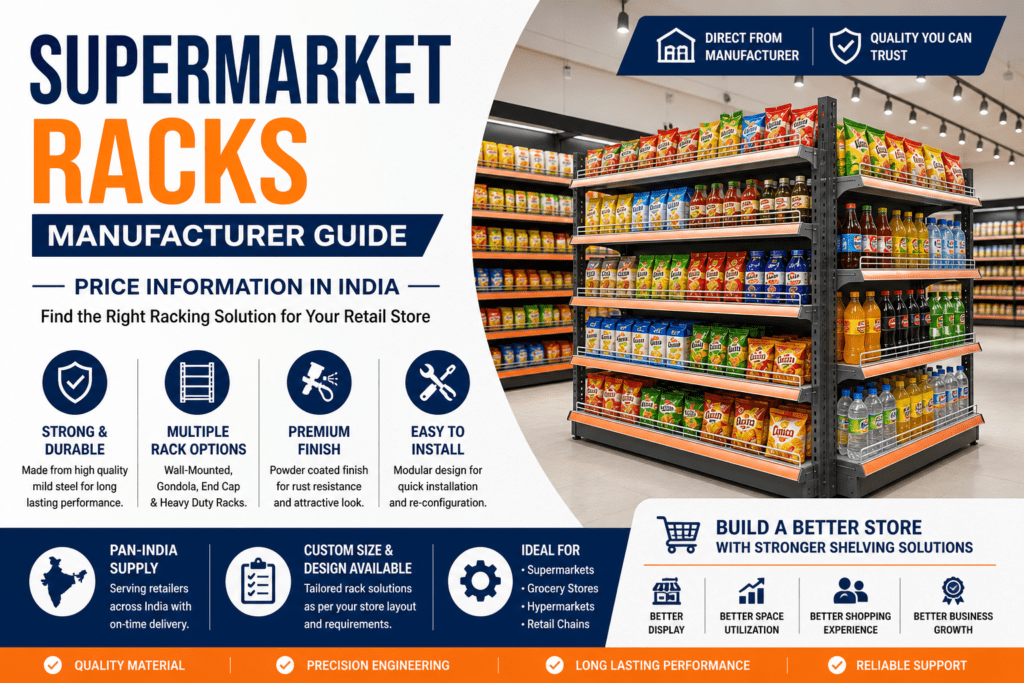
Table of Contents
- 1. Average Supermarket Rack Price in India
- 2. Types of Supermarket Racks & Their Price Range
- 3. Rack Type Comparison Table
- 4. Factors Affecting Supermarket Rack Price
- 5. Manufacturer vs. Supplier: The Price Difference
- 6. Cost vs. Long-Term Value
- 7. Buying Tips for Retail Store Owners
- 8. Frequently Asked Questions (FAQ)
1. Average Supermarket Rack Price in India
Based on our manufacturing and supply experience across hundreds of retail projects in India, here is a realistic price overview for supermarket racks:
| Price Overview by Category |
| Supermarket Racks (Single-Sided, Light-Duty): ₹1,200 – ₹2,500 per unit |
| Standard Gondola Racks (Double-Sided, Mid-Load): ₹2,800 – ₹6,000 per unit |
| Heavy-Duty Supermarket Racks (High-Load, Full-Height): ₹6,500 – ₹15,000+ per unit |
| Wall-Mounted Display Racks: ₹900 – ₹3,500 per unit |
| Checkout Counter Racks / End-Cap Displays: ₹3,000 – ₹8,000 per unit |
These are ex-factory prices for standard sizes with basic powder coating. Custom sizes, special finishes, or bulk orders will change the final price. For reference: a 2,000 sq. ft. general supermarket typically requires ₹3–6 lakhs in racking investment. A hypermarket or larger format store may need ₹15–50 lakhs depending on the product mix and layout.
| Important Note: Prices quoted online by third-party platforms often exclude GST, delivery, installation, and accessories. Always ask for an all-inclusive quote from a verified manufacturer. |
2. Types of Supermarket Racks & Their Price Range
A. Gondola Racks (Most Popular Choice)
Gondola racks are the backbone of any supermarket layout. They are double-sided, freestanding, and allow customers to browse from both sides of an aisle. These racks typically come in heights ranging from 4 feet to 7 feet, and lengths of 3 feet to 6 feet per bay.
- Ideal for: General merchandise, packaged foods, FMCG, toiletries, beverages
- Standard sizes: 4ft×3ft, 5ft×4ft, 6ft×3ft (H×L), depth: 12–18 inches per side
- Load capacity: 80–200 kg per shelf depending on gauge
- Price range: ₹2,800 – ₹9,000 per bay (double-sided unit)
B. Wall-Mounted Racks
Wall-mounted racks are fixed along the perimeter walls of your store. They maximise floor-to-ceiling display space and are ideal for peripheral stocking zones. They work well for small stores where floor area is limited but wall space is ample.
- Ideal for: Small grocery stores, departmental stores, pharmacy sections
- Standard sizes: 3–7 feet height, 12–18 inch depth, configurable widths
- Load capacity: 60–150 kg per shelf
- Price range: ₹900 – ₹3,500 per unit depending on height and shelves

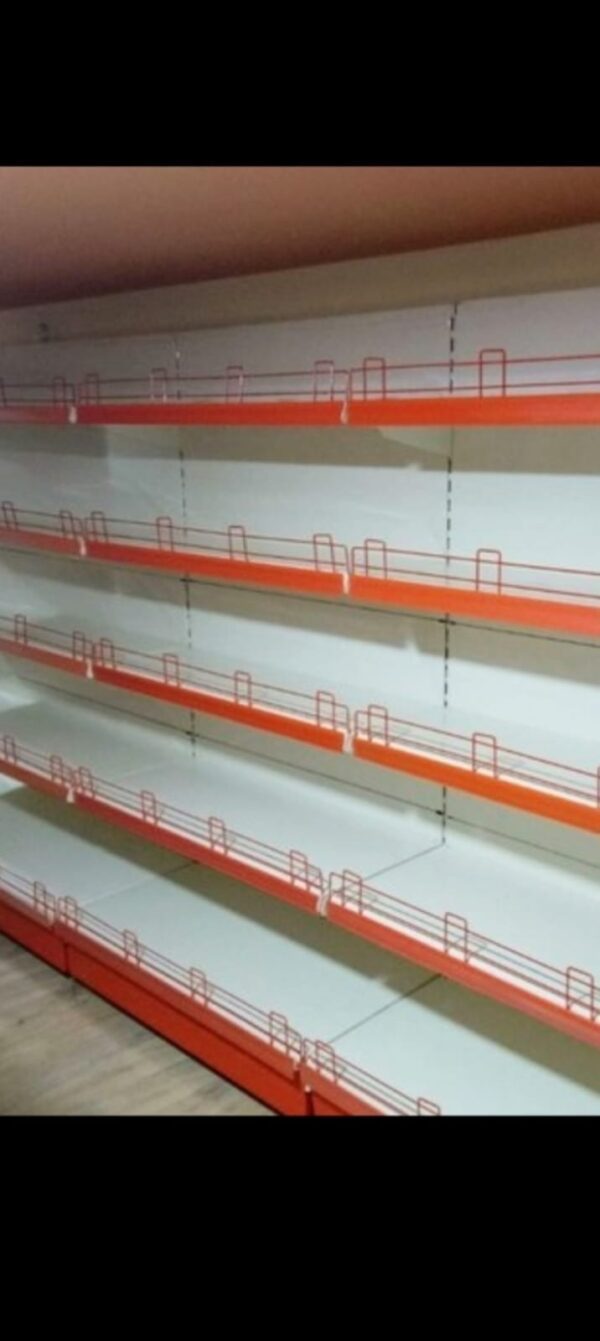
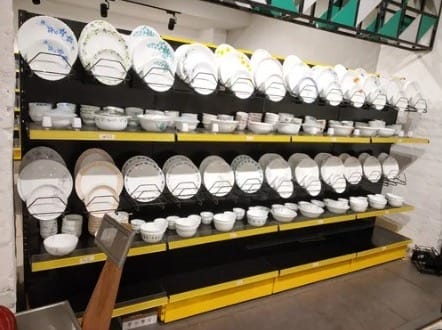
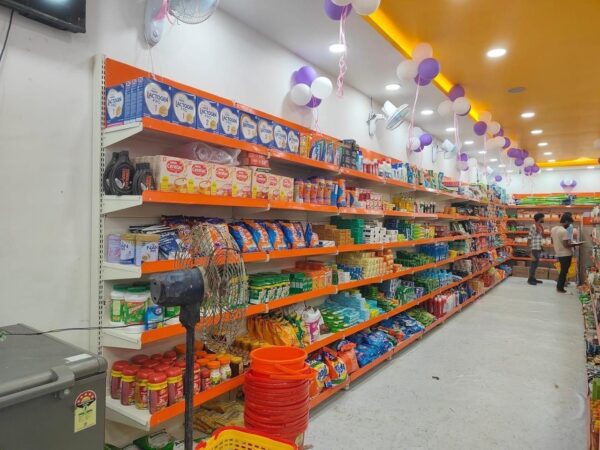
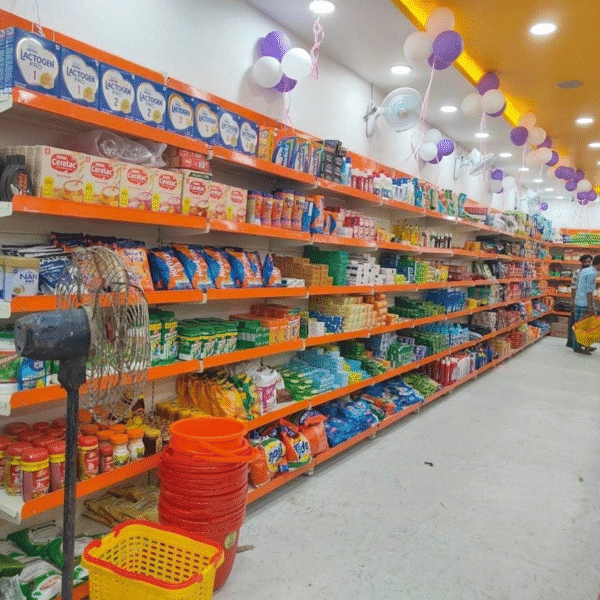
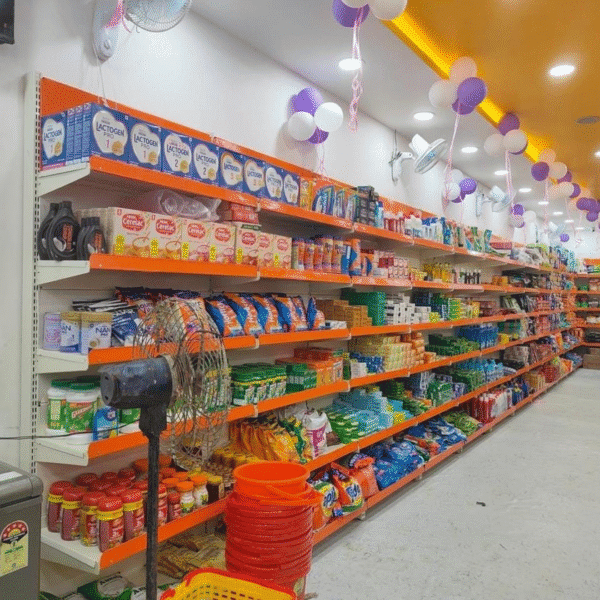
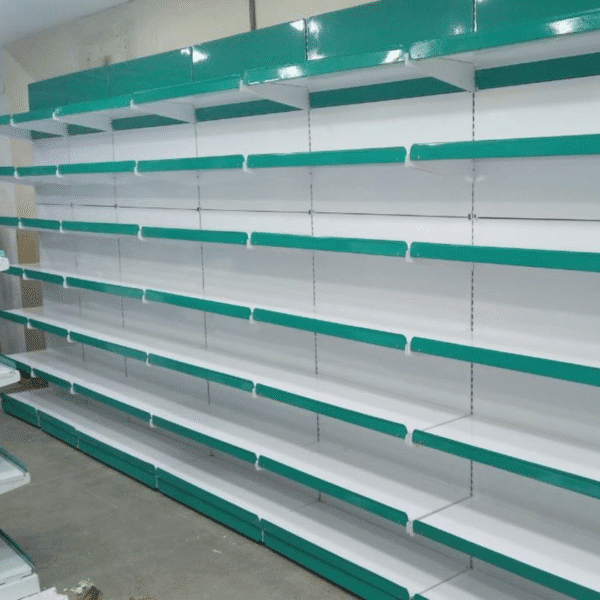
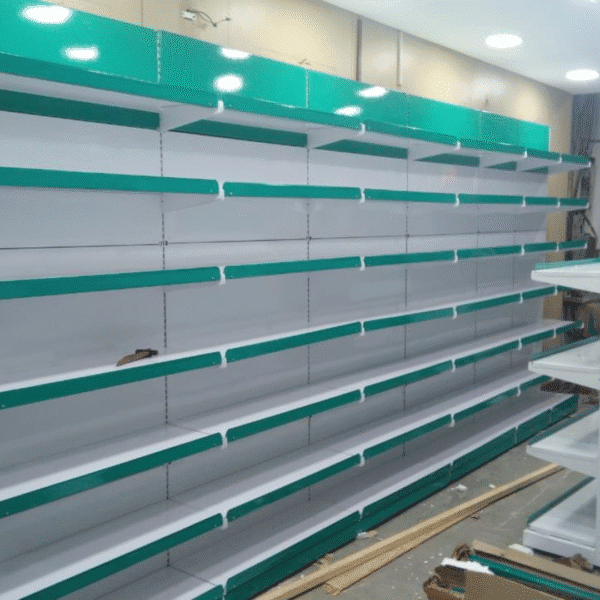
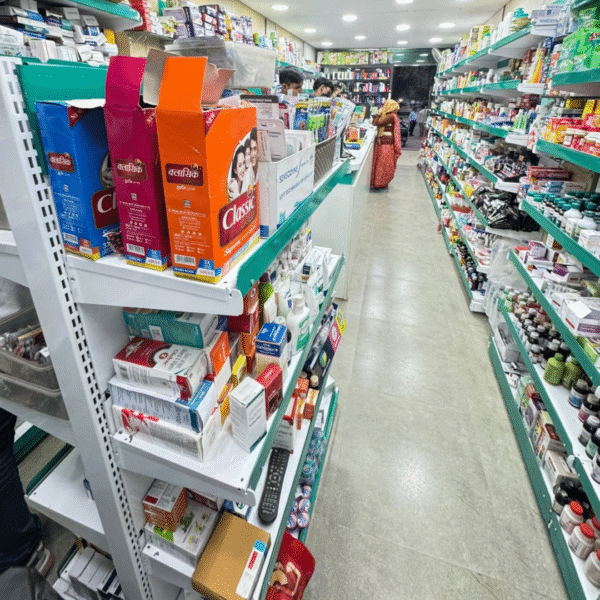
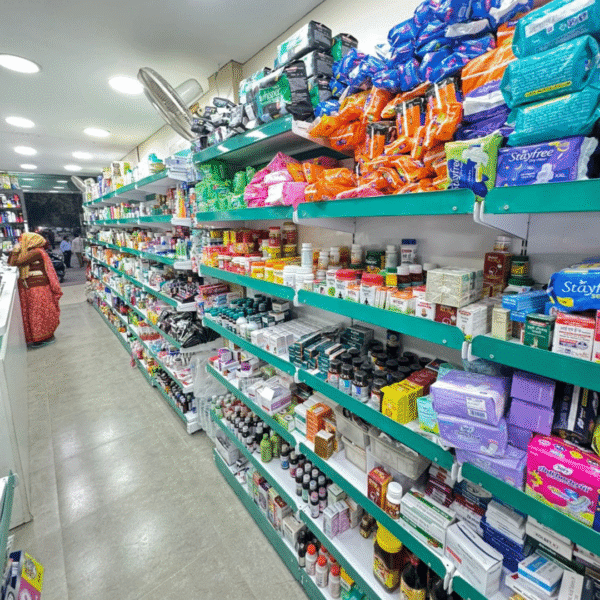
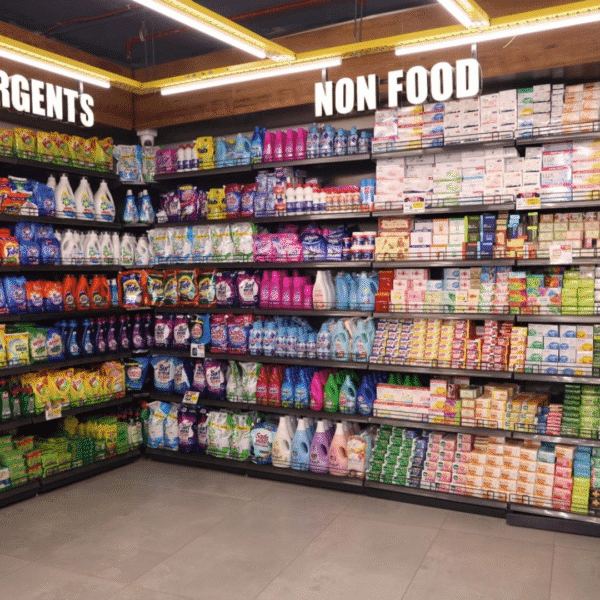
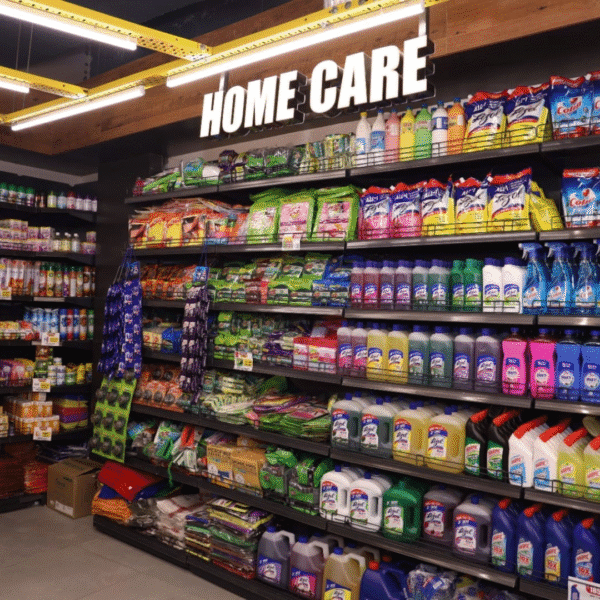
Wall Mount Display Rack
The Wall Mount Display Rack is a durable, stylish shelving unit that optimizes space by mounting on the wall, ideal for displaying items in retail or home environments.
C. Supermarket Racks
Supermarket racks are built for bulk stock, warehousing areas inside stores, backroom storage, or stocking high-weight products like beverages, rice bags, or edible oils. They use thicker steel gauges (1.2–2.0 mm), reinforced frames, and deeper shelves.
- Ideal for: Beverage sections, bulk staples, back-of-store storage
- Standard sizes: 6–9 feet height, 18–24 inch shelf depth
- Load capacity: 200–500+ kg per shelf
- Price range: ₹6,500 – ₹15,000+ per unit

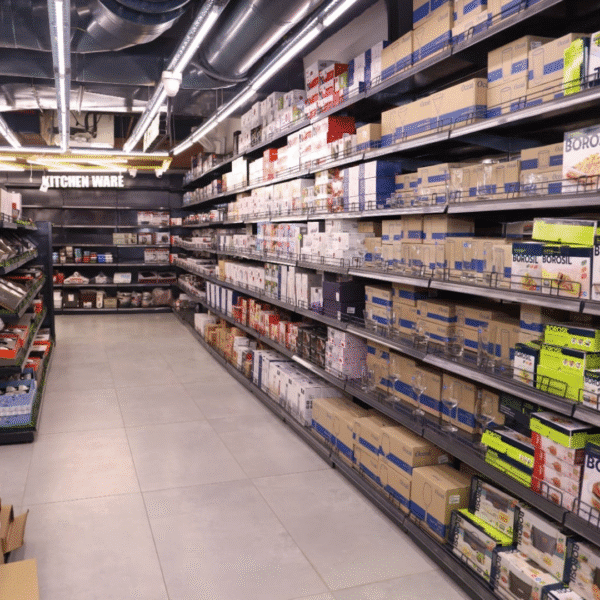
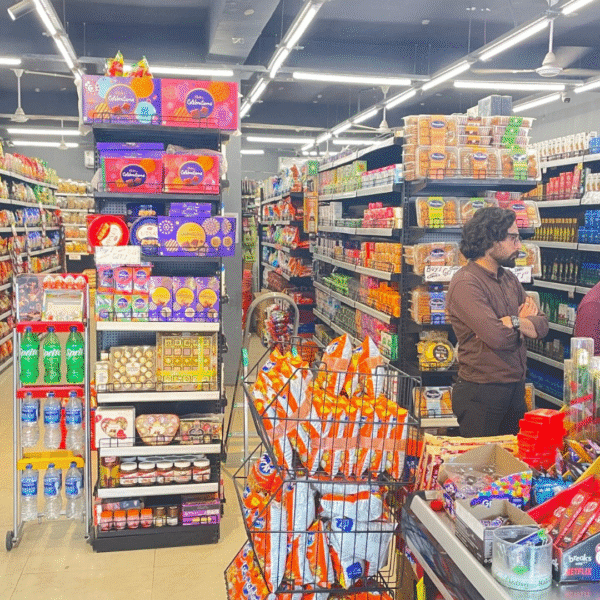
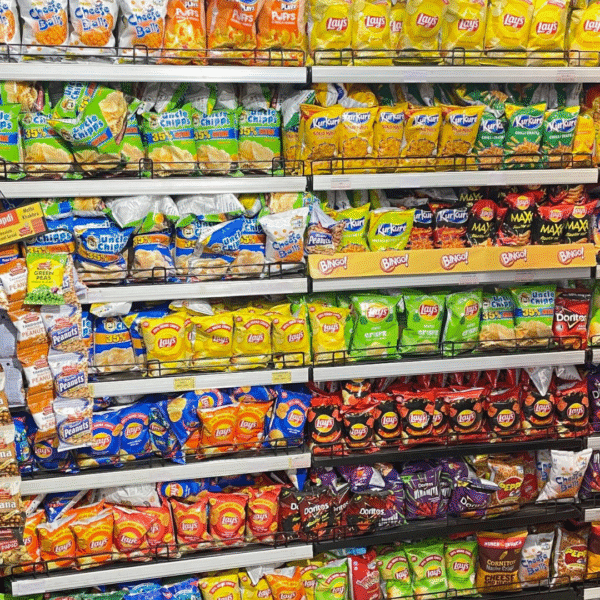
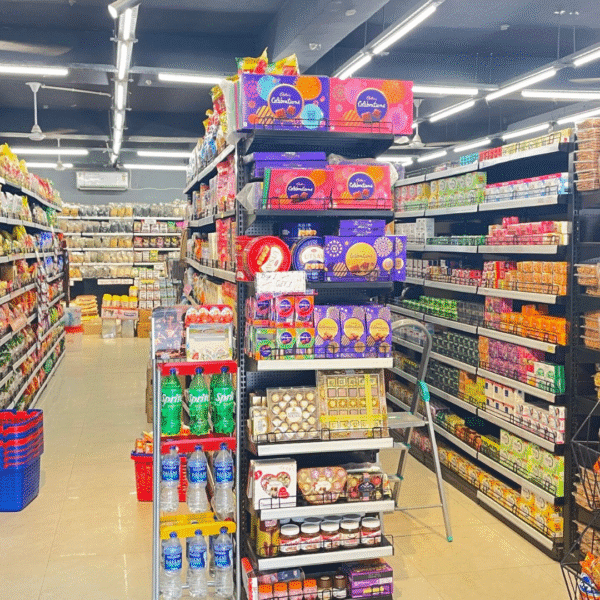
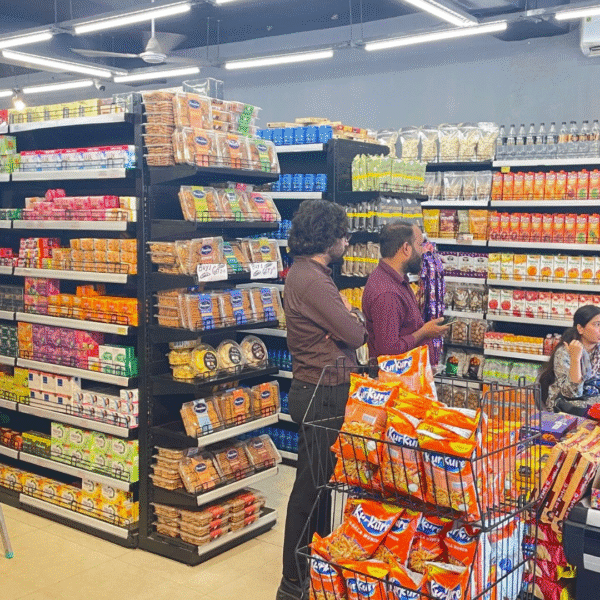
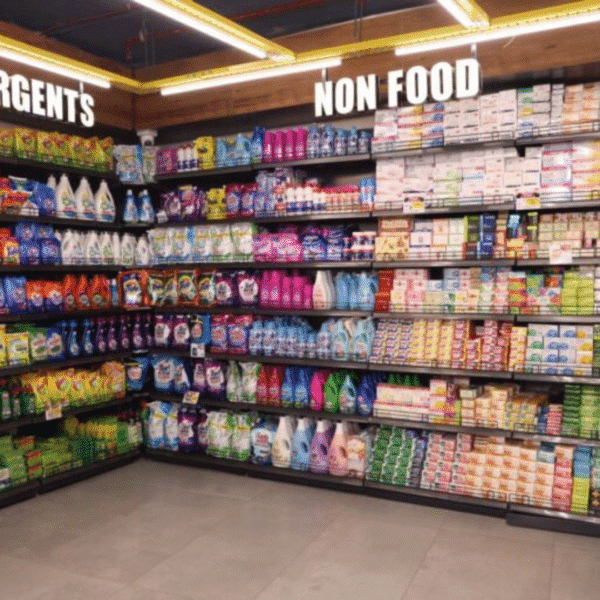
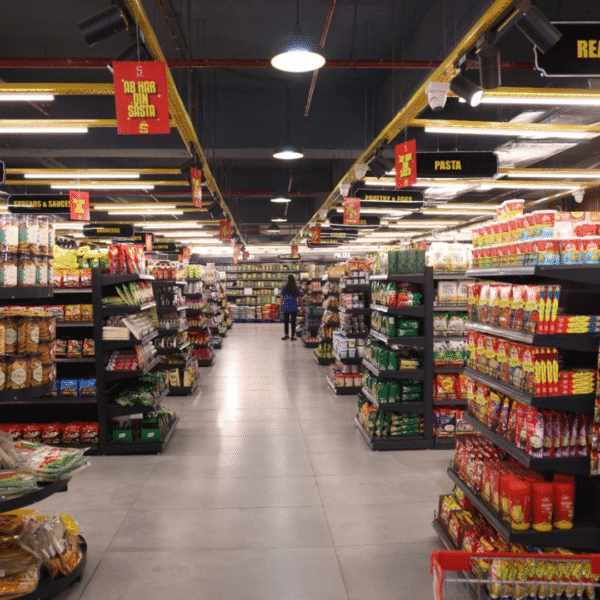
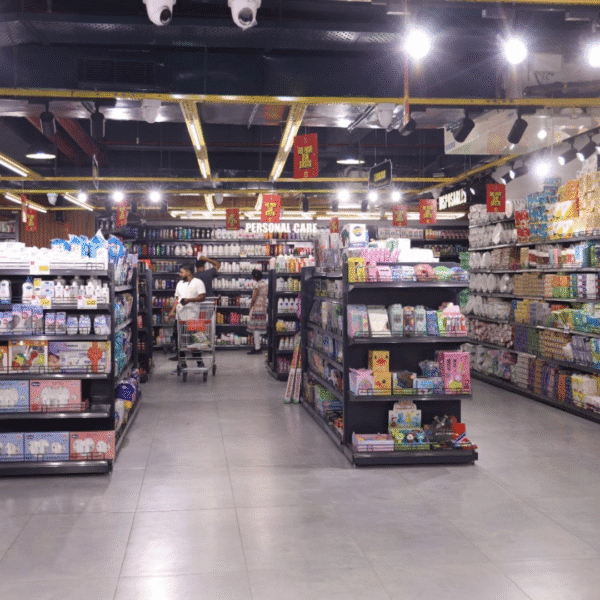
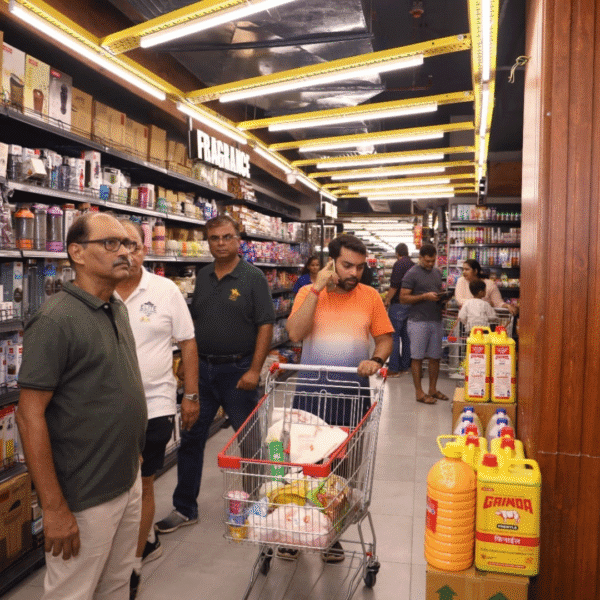
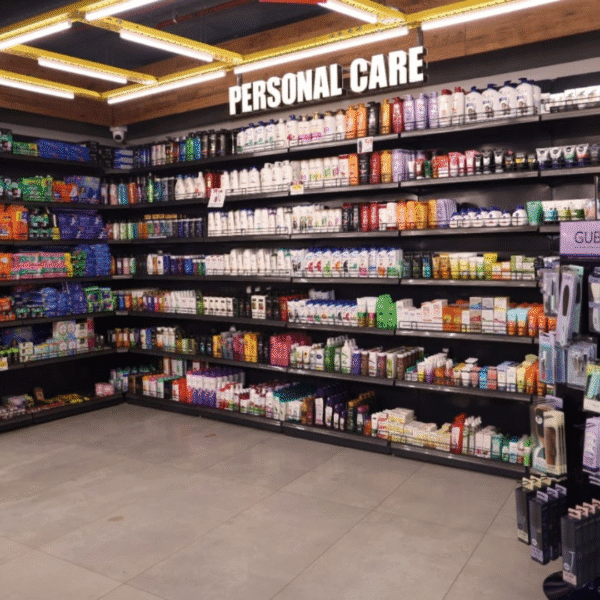
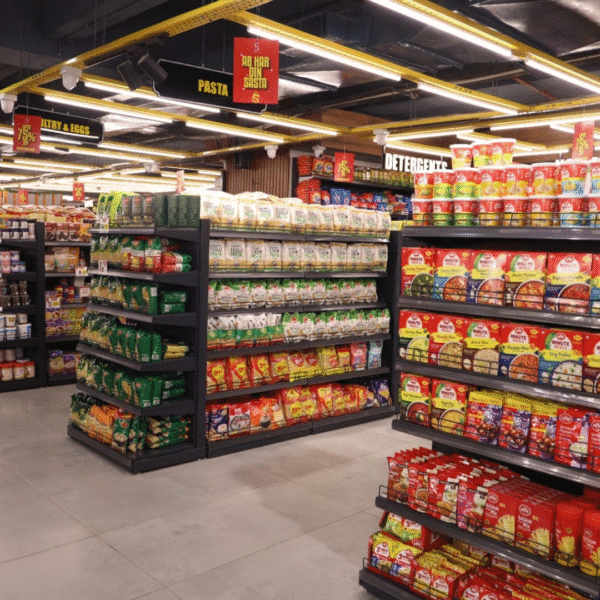
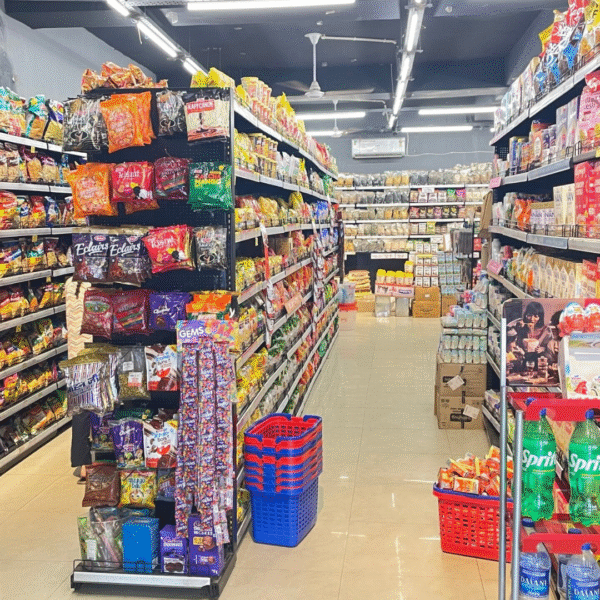
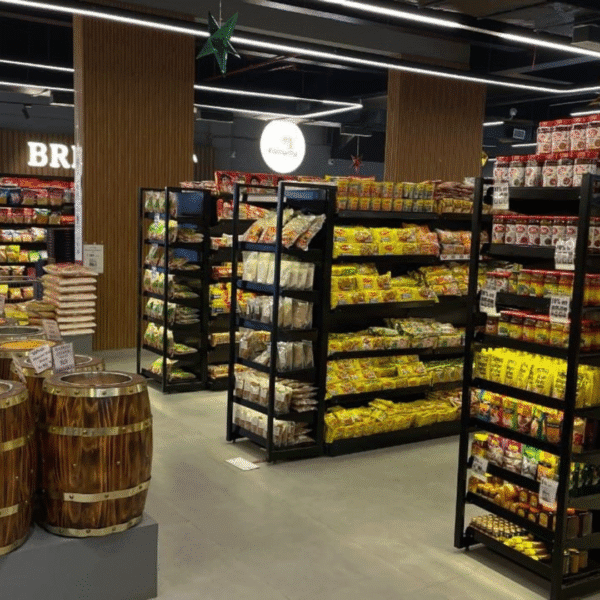
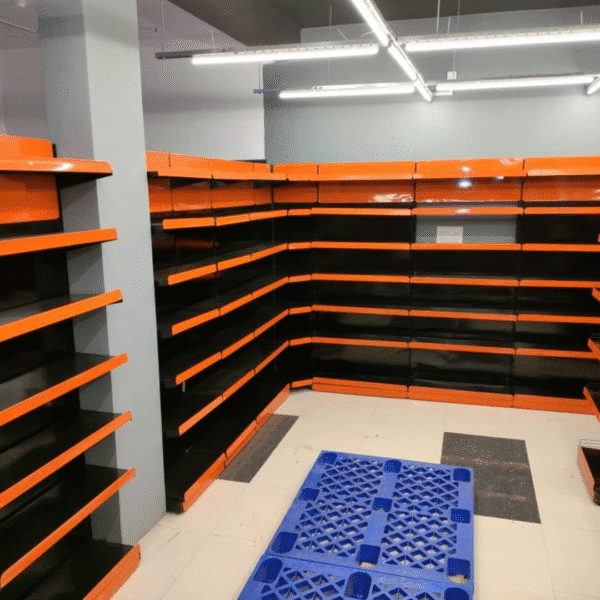
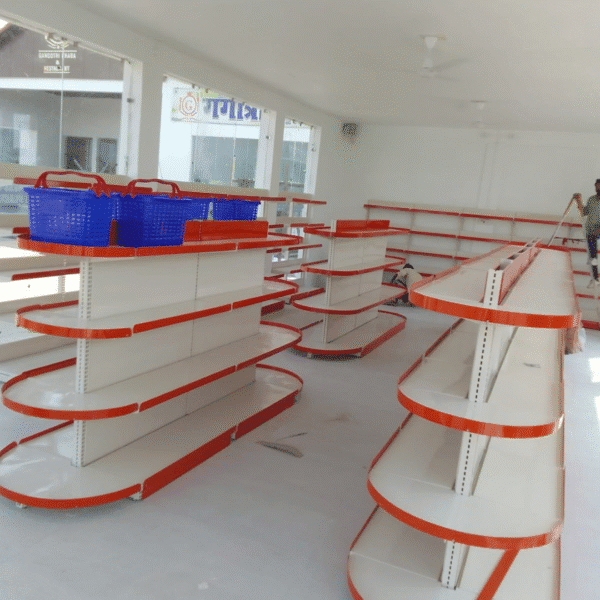
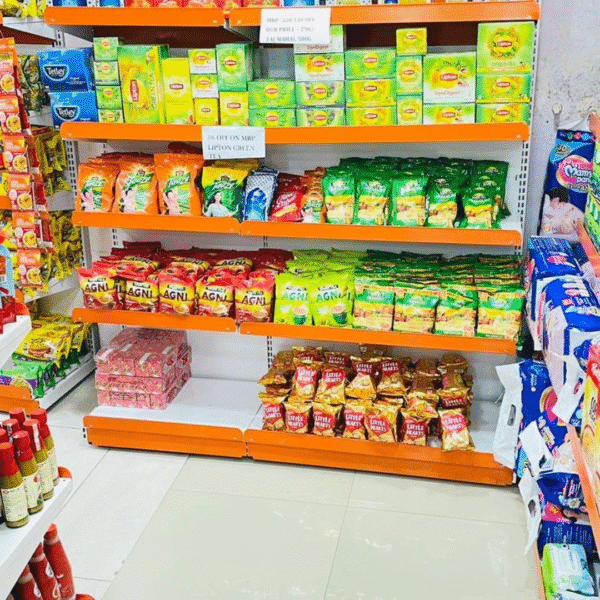
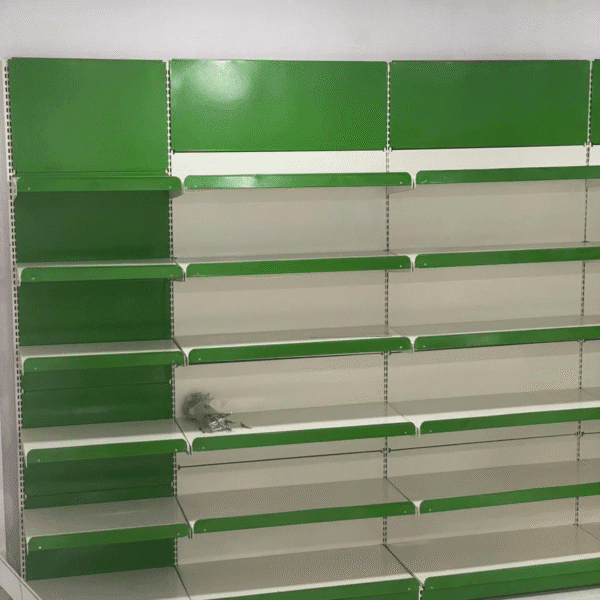
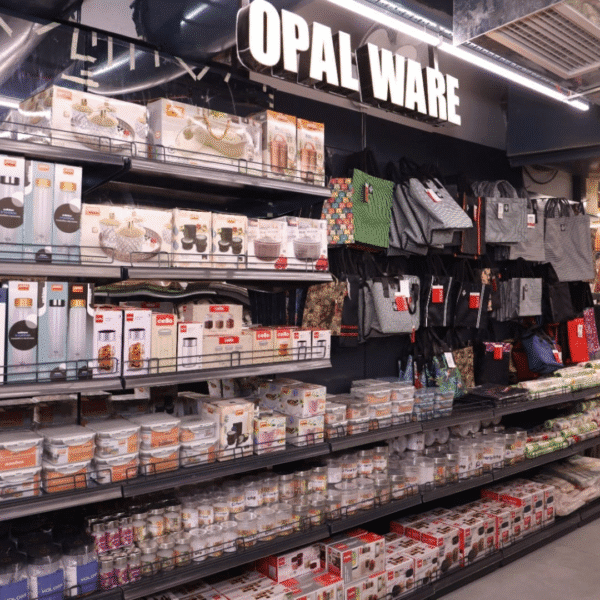
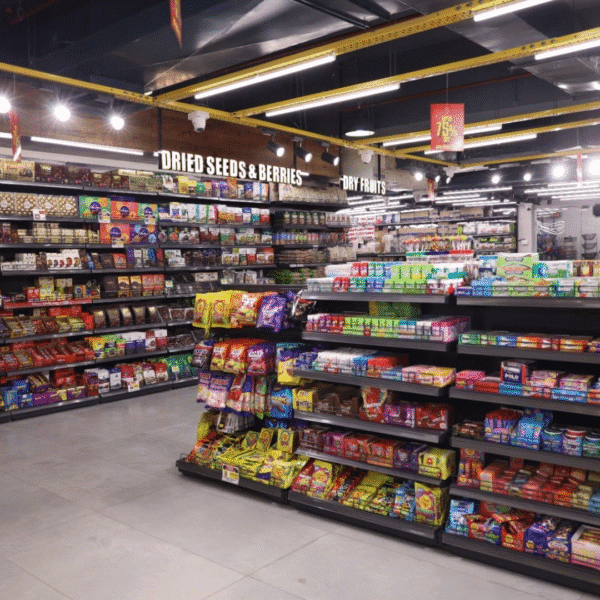
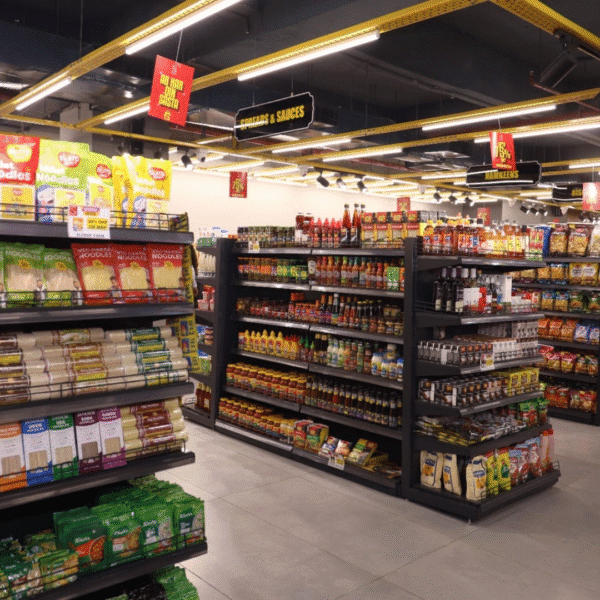
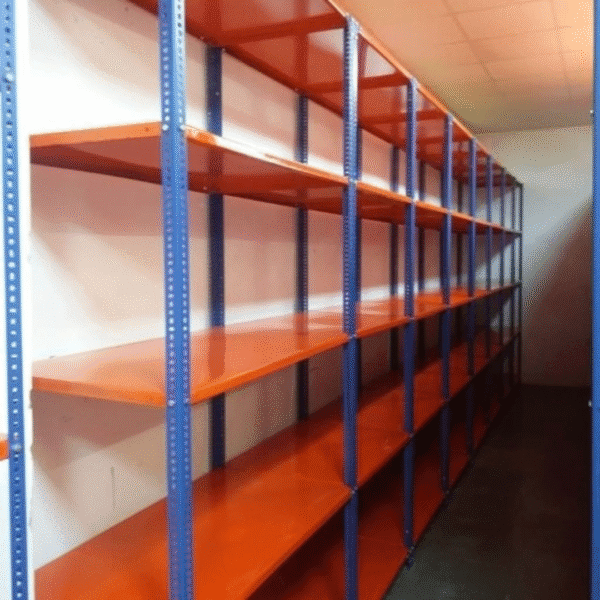
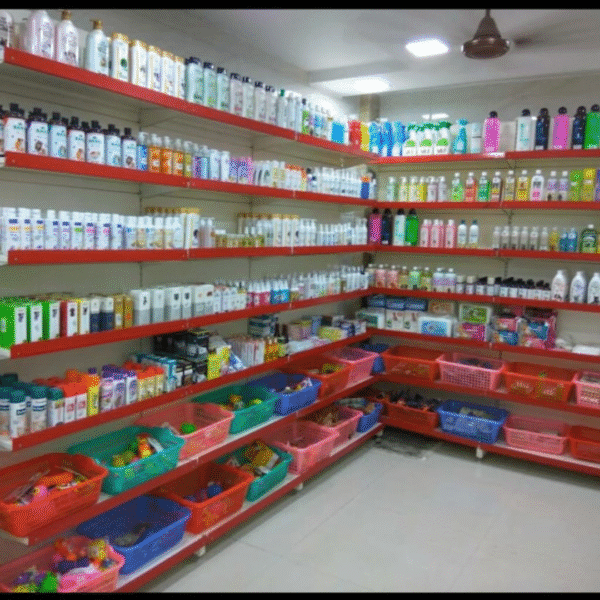
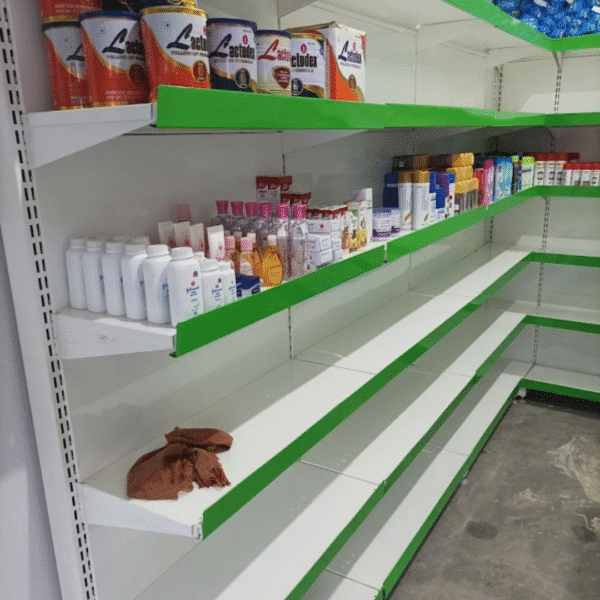
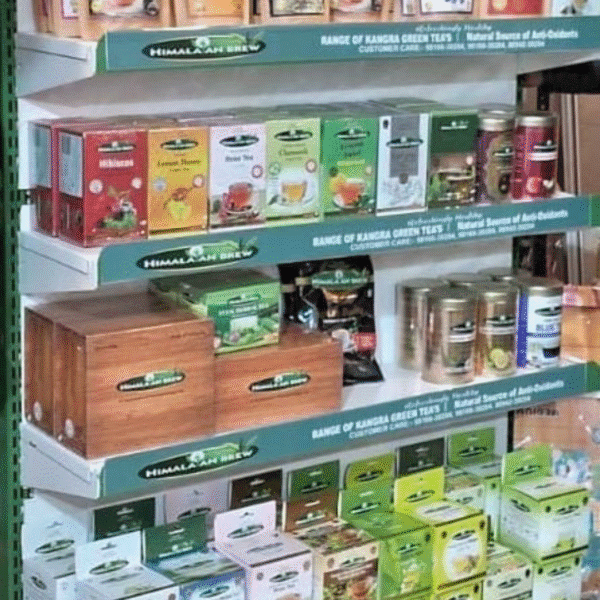
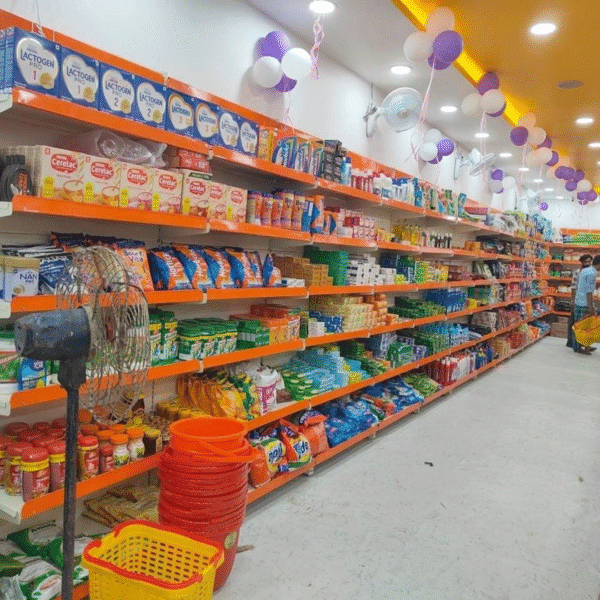
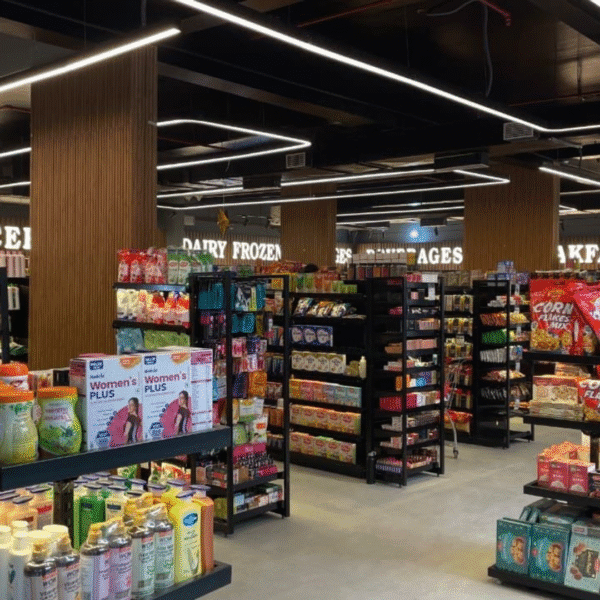
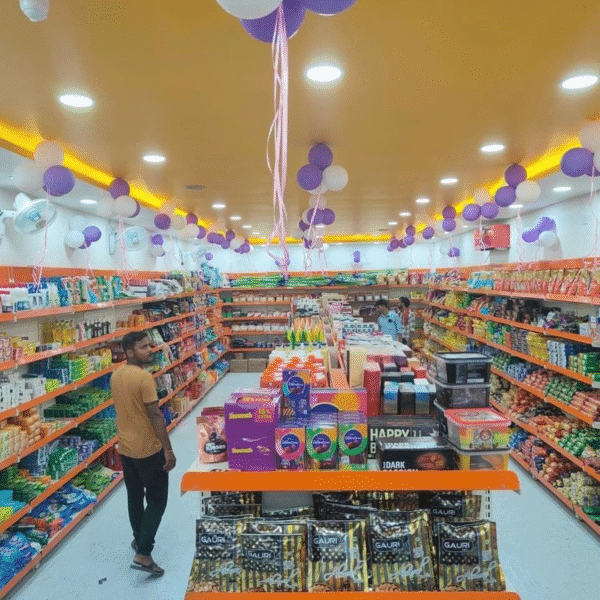
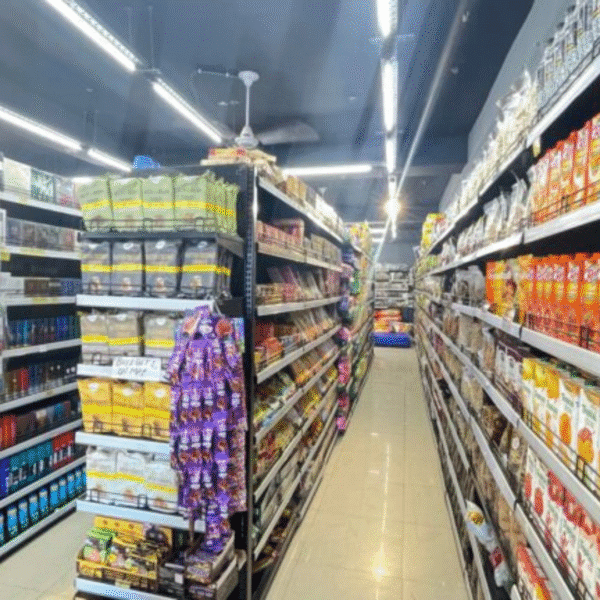
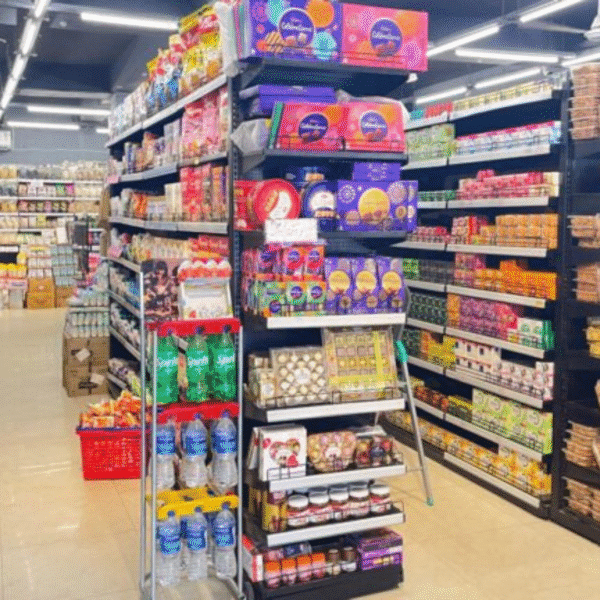
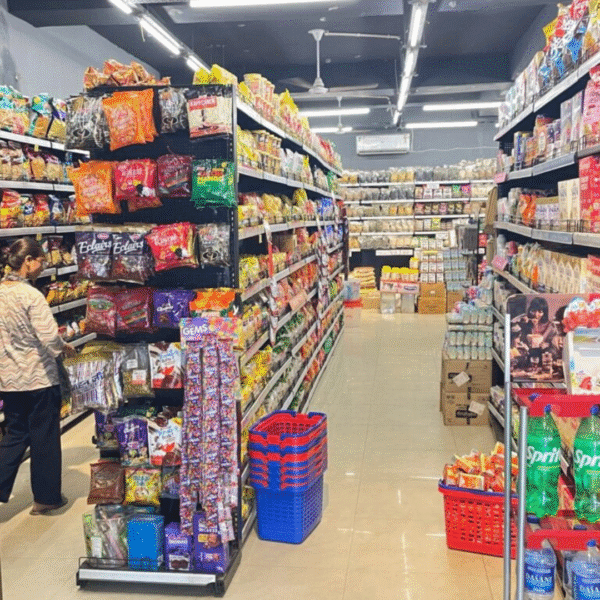
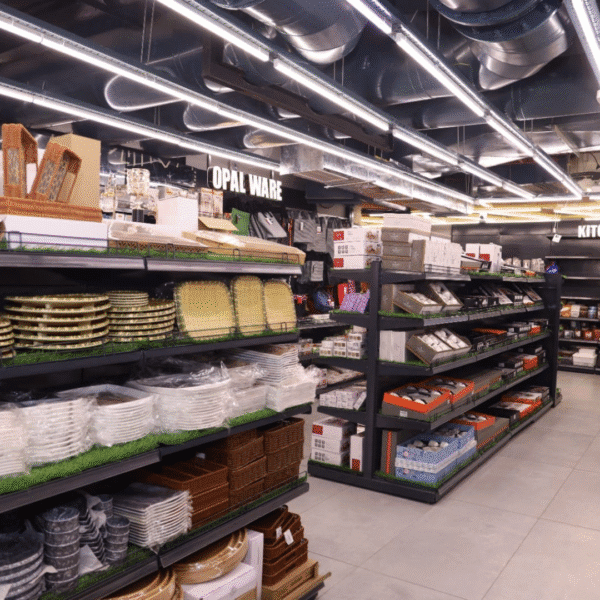
Supermarket Display Racks
A durable and space-efficient supermarket display rack is essential for organized product storage and effective retail presentation. Designed for supermarkets, grocery stores, and retail outlets, these heavy duty racks help improve product visibility, customer movement, and store layout management. Manufactured using high-quality mild steel with a powder-coated finish, the racks offer excellent load capacity, long service life, and resistance to rust and wear.
D. End-Cap and Display Racks
End-cap racks are placed at the end of gondola rows for promotional displays, seasonal products, or high-margin impulse purchases. These are often custom-built with branding panels, LED lighting provisions, and premium finishes.
- Ideal for: Promotions, seasonal goods, high-visibility products
- Standard sizes: 4–6 feet height, usually single-sided
- Price range: ₹3,000 – ₹8,000 per unit

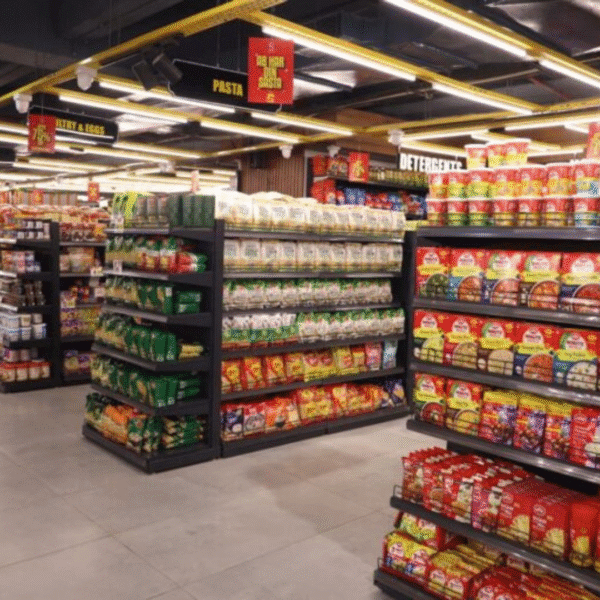
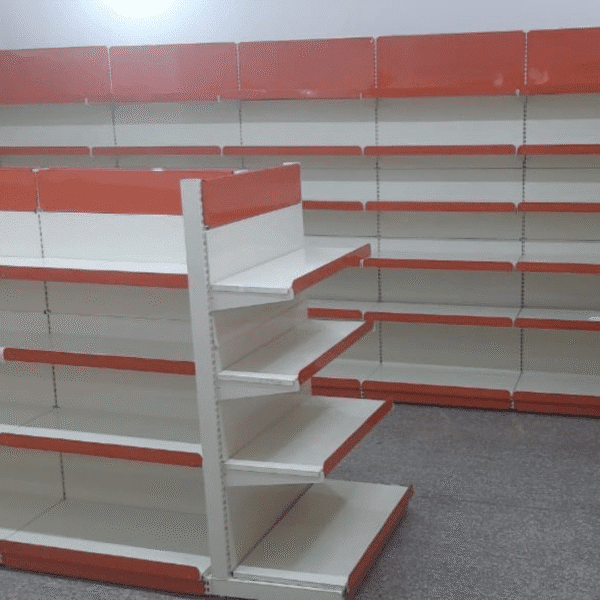
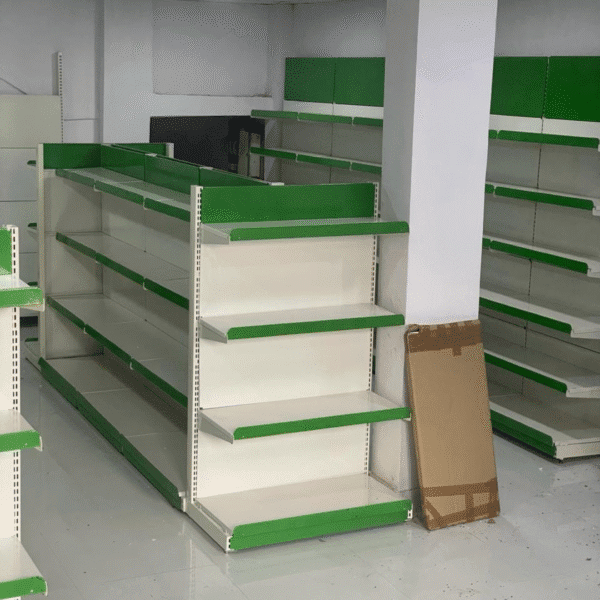
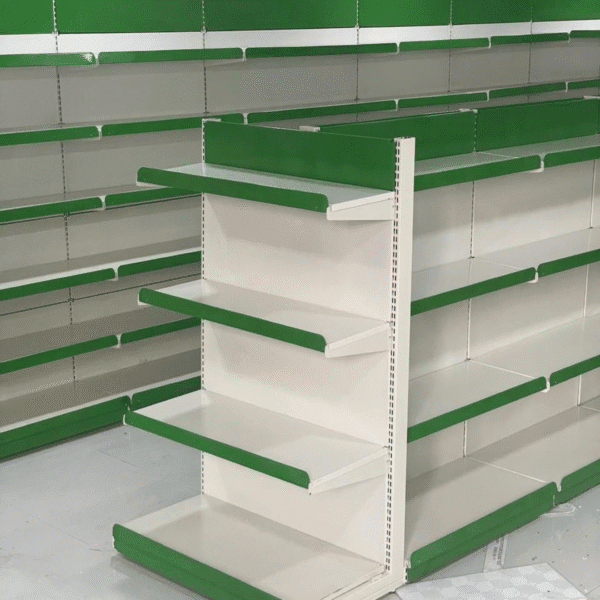
End Cap Display Rack
The End Cap Display Rack is a durable, multi-tier shelving solution designed for end-of-aisle placement, boosting product visibility and enhancing store efficiency.
3. Supermarket Rack Type – Price Comparison Table
Use this quick-reference table to compare rack types before placing your order:
| Rack Type | Price Range (₹) | Load Capacity | Best Use Case |
| Gondola Rack (Double-Sided) | ₹2,800 – ₹9,000 / bay | 80–200 kg/shelf | FMCG, packaged goods, mid-store aisles |
| Wall-Mounted Rack | ₹900 – ₹3,500 / unit | 60–150 kg/shelf | Perimeter stocking, small stores |
| Heavy-Duty Rack | ₹6,500 – ₹15,000+ / unit | 200–500 kg/shelf | Beverages, bulk food, backroom storage |
| End-Cap / Promo Rack | ₹3,000 – ₹8,000 / unit | 50–100 kg/shelf | Promotional, seasonal, impulse items |
| Checkout Counter Rack | ₹1,500 – ₹4,500 / unit | 20–50 kg/shelf | Confectionary, small add-ons at billing |
| Slotted Angle Rack (Budget) | ₹800 – ₹2,500 / unit | 40–80 kg/shelf | Storeroom, small kirana upgrades |
| Pharmacy / Cosmetic Rack | ₹2,500 – ₹6,000 / unit | 40–80 kg/shelf | Pharmacy, beauty, wellness sections |
Note: All prices are indicative ex-factory rates (excluding GST, delivery, and installation). Prices may vary based on quantity, location, finish, and customisation. Contact us for a project-specific quote.
4. Factors Affecting Supermarket Rack Price in India
Understanding what goes into the price of a supermarket rack helps you evaluate quotes properly and avoid being shortchanged on quality. Here are the key cost drivers:
A. Raw Material – Steel Grade and Thickness
The single biggest factor in rack pricing is the quality of mild steel used. Most reputable manufacturers in India use IS 2062-grade mild steel with a thickness ranging from 0.8 mm (light duty) to 2.0 mm (heavy duty). Thicker steel = stronger racks = higher price. Cheap racks are often made from 0.5–0.6 mm steel that bends or warps under load.
- 0.6–0.7 mm steel – budget grade, suitable for light displays only
- 0.8–1.0 mm steel – standard grade for most supermarket racks
- 1.2–2.0 mm steel – heavy-duty, recommended for full-load supermarket use
B. Rack Height and Shelf Configuration
Taller racks with more shelves naturally cost more due to additional material, extra uprights, and shelf brackets. A 4-shelf, 5-foot gondola will cost significantly less than a 6-shelf, 7-foot unit. Most retail store owners opt for 4–6 shelves per unit for customer convenience and easy restocking.
C. Load Capacity per Shelf
Racks rated for higher load require heavier gauge steel and reinforced frame profiles. A rack rated at 80 kg per shelf costs less than one rated at 200 kg. Always match the load rating to your actual product requirements. Overloading underrated racks causes permanent deformation and potential safety hazards.
D. Powder Coating Finish
Standard powder coating in white, grey, or beige adds durability and a clean look. Basic single-layer powder coating costs less. Premium epoxy powder coating (thicker, UV-resistant, rust-proof) adds ₹150–₹400 per unit to the cost but extends the life of the rack significantly in humid environments like coastal cities or air-conditioned supermarkets.
E. Customisation and Branding
Standard sizes produced in bulk are the most cost-effective. The moment you request custom dimensions, brand-coloured finishes, logo panels, integrated lighting channels, or non-standard shelf depths, the price increases. Customisation typically adds 15–40% to the base rack cost depending on complexity.
F. Accessories and Add-Ons
- Label holders / price tag strips – ₹25–₹80 per strip
- Dividers and product pushers – ₹50–₹150 per shelf
- Basket-style shelves (for produce) – ₹200–₹500 per unit
- Wire mesh shelves – ₹300–₹700 depending on size
- Backpanels (pegboard or perforated) – ₹150–₹400 per panel
5. Manufacturer vs. Supplier: The Real Price Difference
This is the most important section of this guide — especially if you are comparing quotes from multiple sources. In India’s retail shelving market, there are three types of sellers: direct manufacturers, authorised distributors, and general traders/resellers.Each adds a different cost layer.
| Seller Type | Markup Over Factory Cost | Lead Time | Customisation | After-Sales Support |
| Direct Manufacturer | 0% markup | 7–21 days | Full custom capability | Yes, in-house team |
| Authorised Distributor | 12–20% markup | 10–25 days | Limited options | Dependent on manufacturer |
| General Trader / Reseller | 25–45% markup | 15–30 days | None | Usually not available |
When you buy directly from supermarket rack manufacturers in India like us, you eliminate the middleman margin entirely. On a ₹5 lakh project, this can save you ₹75,000 – ₹2,25,000 — money that is better spent on store infrastructure, interiors, or inventory.
| Pro Tip: Always ask the seller: ‘Do you manufacture in-house or source from a third party?’ If they hesitate to answer or cannot show you their production facility, they are likely a trader adding markup to factory goods. |
6. Cost vs. Long-Term Value: Why Cheap Racks Cost More
It is very tempting to go for the cheapest quote you get — especially when you are setting up a new store and managing multiple expenses simultaneously. But cheap supermarket racks are almost always a false economy. Here is why:
| Problems with Low-Cost / Substandard Racks |
| Structural sagging within 6–12 months under real product loads |
| Rust and corrosion from poor powder coating — especially in humid or coastal climates |
| Shelf wobble and instability that creates poor product presentation and shopper hesitation |
| No load testing certification — creating potential liability if shelves collapse |
| Non-standard sizes that cannot be extended or matched later when expanding your store |
| Replacement costs that far exceed the original ‘savings’ — often within 18–24 months |
A good quality supermarket rack from a verified manufacturer has an expected lifespan of 8–15 years under normal retail conditions. The rack you buy today will go through thousands of stocking cycles, carry tonnes of product, and contribute to your store’s visual appeal every single day. Investing in quality at the beginning is always the better financial decision.
We have refurbished stores in Delhi NCR and across India where clients replaced their original budget racks with quality alternatives after just two years — often at double the original spend. We are not just selling racks; we are helping you build a store that operates smoothly and looks professional for years to come.
7. Buying Tips for Retail Store Owners
Whether you are opening your first supermarket or expanding an existing chain, these practical tips will help you make a smarter purchase decision:
Before You Buy — The Checklist
- Measure your store space accurately — know total floor area, aisle widths, wall dimensions, and ceiling height before requesting quotes
- Define your product categories — heavy products (beverages, oils) need heavy-duty racks; lighter FMCG products can use standard racks
- Request samples or visit the factory — any serious manufacturer will welcome this
- Ask for load test certificates — ISI-marked or tested racks confirm the load ratings claimed
- Get an itemised quote — price per unit, accessories, delivery, GST, and installation should all be listed separately
- Compare at least 3 quotes — from direct manufacturers, not traders
- Ask about scalability — can you buy more matching racks 6 months later if you expand?
- Confirm delivery lead time — 7–21 days is standard from a manufacturer; longer may indicate sourcing delays
- Review warranty terms — quality manufacturers offer 1–3 year structural warranties
- Plan your store layout and rack planning before placing the order to avoid costly rearrangements after installation
During Installation
- Ensure all uprights are plumb (perfectly vertical) using a spirit level
- Bolt base plates to floor in food and beverage sections for safety compliance
- Leave minimum 900 mm aisle width for customer movement; 1,200 mm for trolleys
- Do not mix heavy-load and light-load shelves in the same unit — check ratings per shelf
- Always use anti-tip accessories for tall racks (above 6 feet) in seismic zones
For stores requiring Supermarke t rack solutions, manufacturer-designed supermarket and grocery racks can be tailored to store layout, product load, and space constraints. Retailers can explore custom rack options from ERA Display Solutions to achieve better space utilization, durability, and a professional retail display setup.
Frequently Asked Questions
Q1. What is the minimum order quantity (MOQ) for supermarket racks from a manufacturer?
Most manufacturers in India work with MOQs of 10–20 units for standard sizes. However, for full store setups or large projects, there is usually no minimum — you order what your store requires. Some manufacturers also supply single units for sample orders or small stores, though pricing per unit will be higher at lower quantities.
Q2. How long does delivery take for supermarket racks across India?
Standard rack sizes available in stock can be delivered within 5–10 working days to most major cities in India. Custom-sized or large-volume orders typically take 15–25 working days from order confirmation. Manufacturers based in Delhi NCR, Pune, and Bengaluru generally have strong Pan-India logistics networks with professional installation teams available in major metros.
Q3. Is GST included in the supermarket rack prices quoted online?
Most online or catalogue prices are quoted ex-GST (excluding tax). Supermarket racks typically attract 18% GST in India. Always ask suppliers to clarify whether their quote is inclusive or exclusive of GST, delivery charges, and installation. A full landed cost comparison is the only fair way to evaluate different quotes.
Q4. What is the difference between gondola racks and slotted angle racks for supermarkets?
Gondola racks are purpose-built for retail display — they have adjustable shelves, clean aesthetics, label holders, and are designed for customer-facing environments. Slotted angle racks are industrial storage racks better suited for back-room warehousing or small kirana stores on a budget. For any customer-facing supermarket floor, gondola racks are always the recommended choice.
Q5. Can supermarket racks be customised for specific store layouts or brand requirements?
Yes. Reputable manufacturers offer full customisation — including non-standard dimensions, brand-specific colours, logo panels, integrated lighting channels, wire basket shelves, and perforated back panels. Custom retail shelving solutions are available for chain stores, franchise outlets, and branded supermarkets. Customisation typically adds 15–40% to standard pricing and requires 3–5 additional working days for production.