
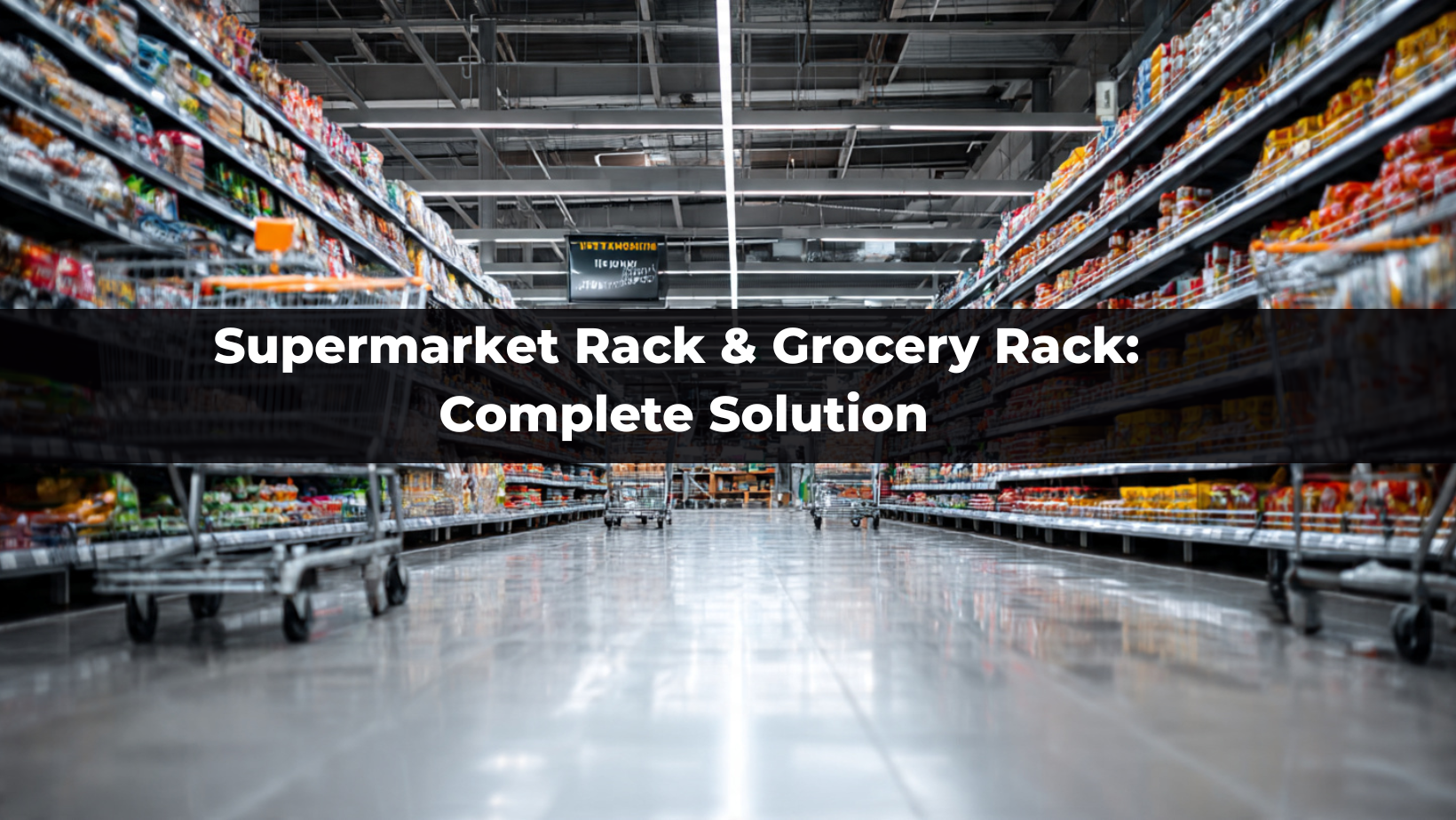
Modern retail stores in India—ranging from traditional kirana shops to organized supermarkets—depend heavily on well-designed shelving infrastructure to maximize space utilization, improve product visibility, and enhance customer experience. Whether you are launching a new retail outlet or upgrading an existing store, the choice of supermarket racks and grocery racks directly impacts operational efficiency, inventory management, and sales performance.
This pillar guide is written from a retail infrastructure and manufacturing perspective, intended for store owners, retail planners, architects, franchise operators, and procurement teams who require reliable, scalable, and future-ready display rack solutions for Indian retail environments.
Table of Contents
- Understanding Supermarket Racks and Grocery Racks
- Key Differences Between Supermarket Racks and Grocery Racks
- Types of Retail Racks Used in Indian Stores
- Material, Durability, and Load Capacity Considerations
- Store Layout Planning and Space Optimization
- Use Cases Across Indian Retail Formats
- Manufacturing vs Reselling: What Retailers Should Know
- Retail Rack Buyer Decision Framework
- Long-Term ROI and Scalability
- Frequently Asked Questions
Understanding Supermarket Racks and Grocery Racks
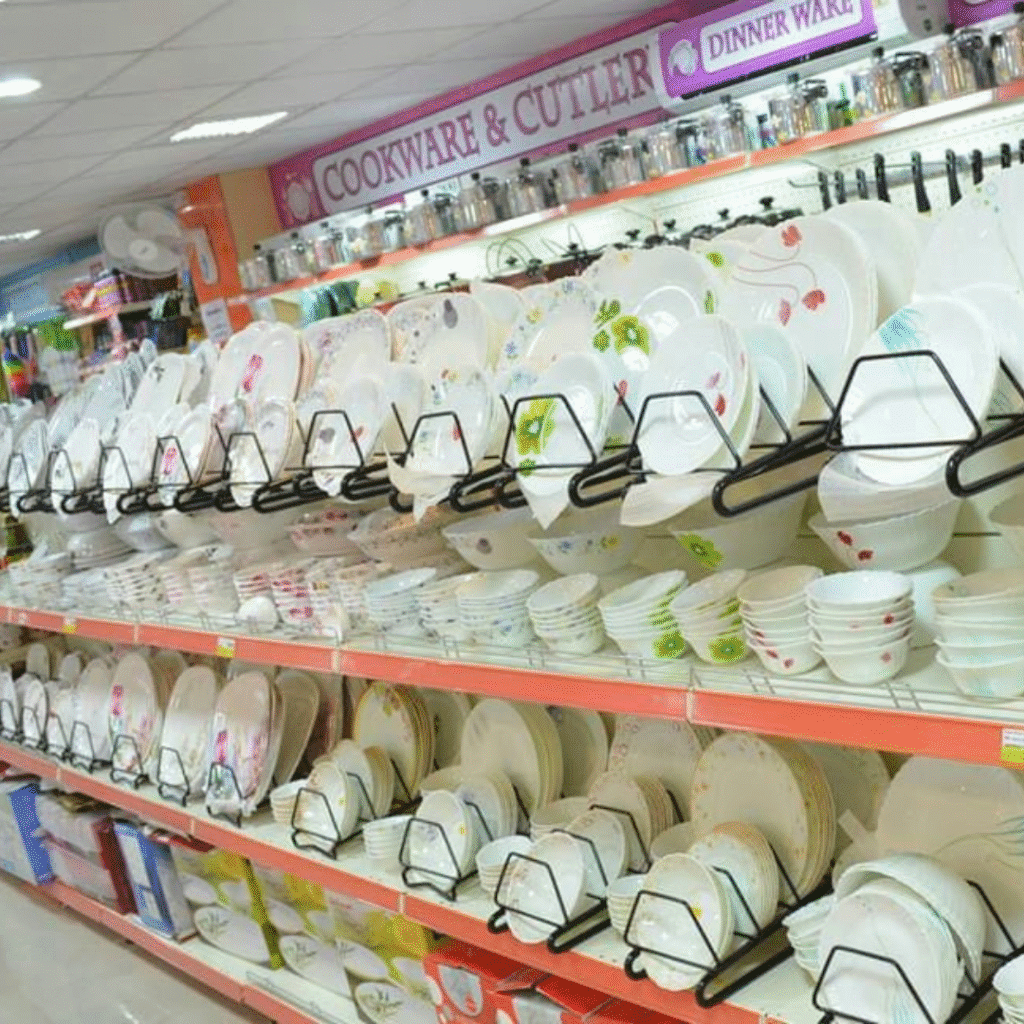
A supermarket rack is a modular retail display system designed for organized retail formats. These racks support a wide range of product categories such as packaged foods, FMCG products, personal care items, and household goods. They are typically uniform in design, powder-coated for durability, and engineered for visual merchandising consistency across store sections.
Grocery racks, while structurally similar, are optimized for food retail operations with higher turnover and heavier products. These racks are commonly used in kirana stores, mini-markets, and grocery chains, where staples like rice bags, oil tins, beverages, and bulk packs require higher load-bearing capacity and easy access for frequent restocking.
Both rack systems serve the same core function—organizing products efficiently while optimizing floor and vertical space. The difference lies in application context, merchandising intent, and load engineering rather than basic structure.
For a detailed comparison, see: Difference Between Supermarket Racks and Grocery Racks
Key Differences Between Supermarket Racks and Grocery Racks
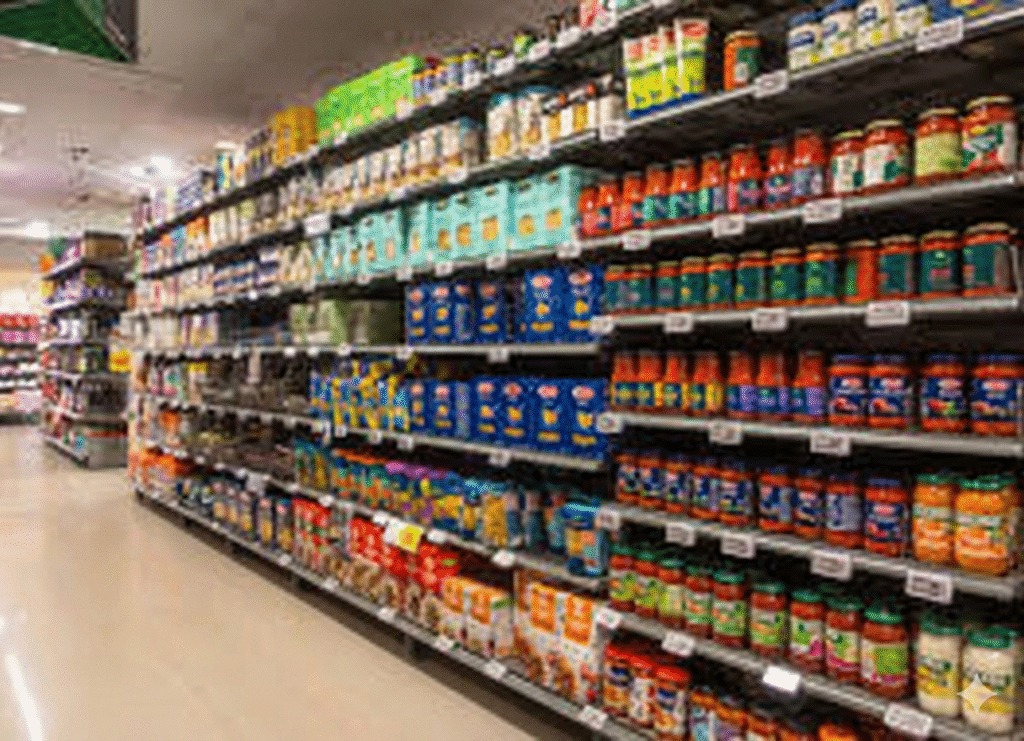
Although the terms are often used interchangeably in India, their practical applications differ.
Supermarket racks are designed for:
- Organized retail environments
- Consistent aesthetics and branding integration
- Optimized shelf depths for packaged goods
- Planned customer movement and aisle layouts
Grocery racks focus on:
- Higher load capacity for staples and bulk items
- Faster stocking and replenishment
- Functional durability over visual presentation
- Space efficiency in compact store formats
Retail takeaway: Supermarkets require a system-level merchandising approach, while grocery-focused setups prioritize strength, accessibility, and operational speed.
Types of Retail Racks Used in Indian Stores
Single-Sided Wall Racks
Installed along store walls to maximize usable floor space. Typical depths range from 300–450 mm. These racks are ideal for categories like packaged foods, personal care, and slow-moving inventory.
Double-Sided Center Gondola Racks
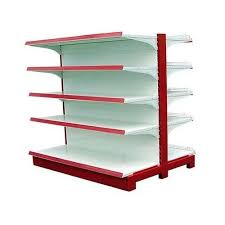
Free-standing racks placed in the middle of the store to form aisles. These provide the highest display density and are standard in supermarkets and medium-sized grocery stores.
End-Cap Display Units
Positioned at aisle ends for maximum visibility. Commonly used for promotions, seasonal products, and high-margin SKUs.
Heavy-Duty Base Shelving
Reinforced lower shelves designed to handle staples, beverages, and bulk packaging. Load capacity often exceeds 200 kg per shelf level.
Vegetable and Fruit Racks
Angled racks with wire mesh or perforated bases to ensure ventilation and moisture control. These improve freshness, accessibility, and visual appeal.
Checkout Counter Display Racks
Compact impulse-buy racks placed near billing counters to increase last-minute purchases.
Deep dive available in: Types of Supermarket Racks Used in Indian Retail Stores
Material, Durability & Load Capacity Considerations
Steel Framework Quality
High-quality supermarket and grocery racks are manufactured using cold-rolled mild steel (MS), typically in 18–20 gauge thickness. Structural durability depends on proper welding, reinforcement at stress points, and well-designed support brackets.
Surface Finishing
A professional seven-tank pre-treatment process followed by powder coating ensures corrosion resistance, long-lasting color, and protection against daily wear in Indian retail environments.
Load Capacity Engineering
- Standard shelving: 80–120 kg per shelf (distributed load)
- Heavy-duty shelving: 150–250 kg per shelf
Actual capacity varies based on shelf span, steel thickness, and bracket design. Retailers should always rely on certified load specifications rather than assumptions.
See technical breakdown: Grocery Rack Sizes and Load Capacity Explained
Store Layout Planning and Space Optimization
Floor Space Utilization
An efficient retail layout typically allocates 60–70% of floor space to display fixtures and 30–40% to aisles, checkout, and entry zones.
Aisle Width Standards
- Minimum functional width: 900 mm
- Comfortable two-way shopping: 1200–1500 mm
Narrow aisles reduce browsing time and negatively affect customer experience, especially for elderly shoppers and families.
Vertical Merchandising Strategy
- Eye level (900–1500 mm): High-margin and fast-moving products
- Lower shelves: Bulk and staple items
- Upper shelves: Slow-moving or reserve stock
Planning guide: How to Choose the Right Supermarket Rack Layout
Use Cases Across Indian Retail Formats
Kirana Store Modernization
Compact grocery rack systems transform cluttered stores into organized retail spaces. Tall racks (up to 2100 mm) and narrow depths maximize storage without increasing floor footprint.
Small Supermarkets (800–1500 sq ft)
Balanced layouts using center gondolas and wall racks enable category visibility while maintaining smooth customer flow.
Mid-Size Grocery Stores (1500–3000 sq ft)
These stores benefit from modular rack systems that allow category zoning, promotional areas, and future expansion without structural changes.
Large Supermarkets and Hypermarkets
Heavy-duty racks, systematic aisle grids, and specialized fixtures are essential to handle bulk inventory and high footfall efficiently.
Manufacturing vs Reselling: What Retailers Should Know
Direct Manufacturer Advantages
- Transparent pricing
- Custom size and layout support
- Consistent quality control
- Long-term component compatibility
Manufacturers understand engineering requirements and can modify rack designs based on store constraints such as columns, ceiling height, or product mix.
Limitations of Resellers
Resellers usually offer fixed catalog products with limited customization. Quality varies depending on sourcing, and long-term expansion compatibility is often uncertain.
Price clarity: Supermarket Rack Price in India – Manufacturer Guide
Retail Rack Buyer Decision Framework
Retail buyers should evaluate rack suppliers on:
- Certified load ratings
- Steel quality and coating process
- Installation expertise
- Expansion and replacement compatibility
- Experience with similar retail formats
Avoid decisions based solely on upfront price. Total cost of ownership is a more accurate measure of value.
Long-Term ROI and Scalability
High-quality supermarket and grocery rack systems:
- Improve product visibility and accessibility
- Reduce staff handling time
- Enhance store perception and trust
- Scale easily across multiple locations
Well-engineered racks typically recover their cost premium within 12–18 months through better space utilization and sales efficiency.
Frequently Asked Questions
What is the ideal rack height for grocery stores in India?
Most grocery stores use racks between 1800–2100 mm for accessibility and storage balance.
How much load can a grocery rack handle?
Standard racks support 80–120 kg per shelf, while heavy-duty racks handle up to 250 kg.
Are modular racks better than fixed racks?
Yes. Modular racks allow reconfiguration as product mix changes, extending rack lifespan.
Which material is best for Indian climates?
Powder-coated mild steel is cost-effective and durable for most regions in India.
Final Considerations
Supermarket racks and grocery racks are core retail infrastructure, not commodity furniture. Treating them as long-term business assets rather than short-term purchases leads to better store performance, safer operations, and consistent brand presentation.
Retailers seeking proven design benchmarks and manufacturing-led insights can study real-world implementations from ERA Display Solutions, which offers experience-driven supermarket and grocery rack solutions tailored for Indian store formats. Reviewing such manufacturer-backed systems helps buyers understand how material quality, layout logic, and modular design translate into measurable retail efficiency.
For stores requiring custom rack solutions, manufacturer-designed supermarket and grocery racks can be tailored to store layout, product load, and space constraints. Retailers can explore custom rack options from ERA Display Solutions to achieve better space utilization, durability, and a professional retail display setup.